
Top 5 Legit Apps That Pay You for Walking in 2026
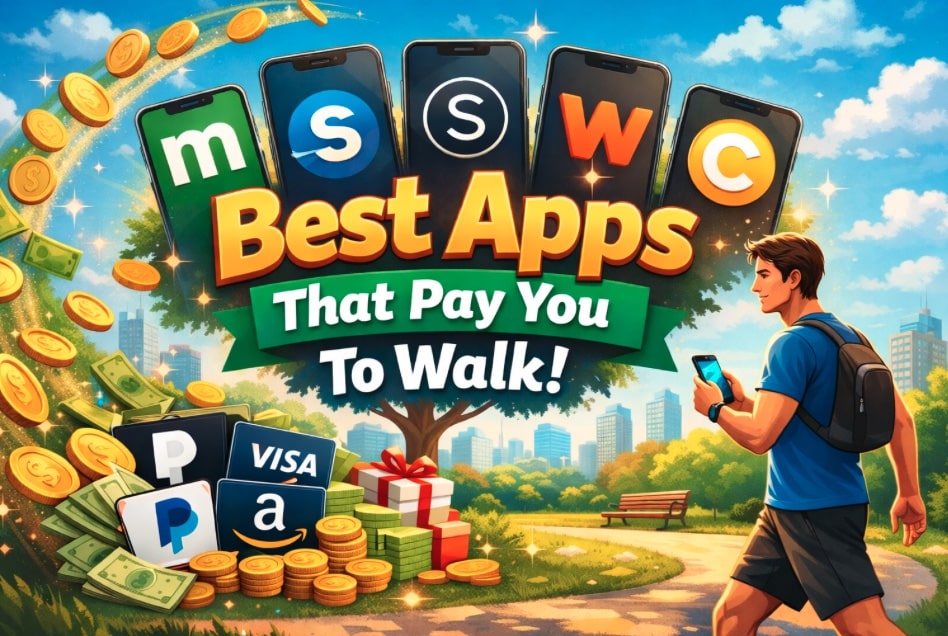
What if the steps you already take every day could earn you something back?
Not a salary. Not “passive income.” But small, real rewards—gift cards, discounts, occasional cash-outs—that feel like a bonus for staying active. That’s the real promise behind walking reward apps, once you strip away the flashy ads and exaggerated payouts.
These apps track your steps through your phone (often via Apple Health or Google Fit) and convert movement into points or coins. For many people, that simple system is enough to create a habit: walk a little more, check the app, stay consistent. The money is modest, but the motivation can be surprisingly effective.
Reward apps pay you for your time.
This pays you for what you build.
Start My Free Training →
That said, walking apps only make sense when you understand their limits. Earnings are slow, rewards change, and the fastest progress usually comes from ads, offers, or referrals—not just steps. Treat them as a fitness bonus, not an income stream, and they can actually be worth your time.
Below, I’ll break down five walking apps that are widely considered legit—Macadam, Sweatcoin, Winwalk, WeWard, and CashWalk—explaining exactly how they work, how much people really earn, where users get frustrated, and who each app is best suited for.
1) Macadam

Macadam is popular in Europe and feels more “cash-like” than many walking apps, as it often promotes bank transfers (and, in some regions, PayPal or gift cards).
The catch is that Macadam doesn’t run on a simple, fixed “X coins per 1,000 steps” formula. Instead, it uses milestone rewards that can change over time, making it hard to predict earnings week to week.
Registration
You download it on Google Play or the App Store, then sign up using email, phone, or a Google/Apple login. After that, you confirm via email/SMS. You can also enter a referral code (many people grab them from forums like r/beermoney) for a starting bonus of around 500–1,000 coins.
How it works and earnings
Macadam typically syncs with Google Fit or Apple Health. It pays through milestones (which can change). For example, the app’s own help docs show that 2,500 steps = 15 coins, and 5,000 steps = 25 coins total—meaning it doesn’t always “stack” rewards the way users expect.
On top of the steps, it pushes extras like ads, surveys, daily check-ins, challenges, and sometimes location-based “coin hunts.” That’s where the faster progress usually comes from.
There’s no strict daily cap in Winwalk’s model, but earnings vary widely. If you really engage with bonuses, you’ll see some people claim 200–500 coins/day. Most users land lower, especially if they only walk and don’t touch offers.
Realistic earnings
If you walk 10,000 steps a day, you can build up coins worth a few dollars a month. People often infer value from current redemptions, like around 30,000–31,500 coins for £15 in UK examples. With bonuses, $5–$15/month gets mentioned a lot. Without referrals, many users say it’s often less, which is where disappointment kicks in.
Cash-out, methods, and wait time
This is where Macadam can feel more “real” than marketplace-only apps. Thresholds vary by region and reward, but people often mention 20,000+ coins as a rough starting point—still, you should always check your own redeem page because it changes.
Redemptions can include:
- Bank transfer (commonly promoted)
- PayPal in some regions (like the UK)
- Gift cards (Amazon and others)
- Merchant discounts
Processing often takes 3–15 days, and you may need verification.
What people usually complain about
Macadam tends to get this reputation: “It works, but it’s slow and unpredictable.” Complaints usually focus on dynamic rates, step verification issues, and coin adjustments. Still, many people keep it because it helps them stay consistent.
Best for: walkers who want a chance at cash-like payouts and don’t mind variability.
2) Sweatcoin

Sweatcoin has millions of users and huge brand recognition. It also creates the biggest expectation gap. People download it thinking “cash,” then realise most rewards work more like deals and promos.
Registration
Install it, sign up with email/phone, and approve motion permissions. Sweatcoin often needs location access too, because it focuses on verified outdoor steps.
How it works and earnings
Sweatcoin tracks verified outdoor steps (indoor steps don’t count currently). The earn rate people quote most often is about 0.95 sweatcoins per 1,000 steps, which reflects a 5% commission.
You can boost earnings through:
- ads
- referrals
- challenges
There’s also Premium, which can double earnings and remove ads. Pricing varies by country, so don’t lock it in as a universal number. In the UK, people often reference £4.99/month or an annual plan.
Free users commonly see a cap of around 10–15 sweatcoins/day.
Realistic earnings
For 10,000 steps, you might earn 9–10 sweatcoins/day, so ~300–400/month. The problem is the “value” depends on what you redeem. Marketplace rewards vary, and the SWEAT crypto route adds volatility and extra steps.
In user discussions, you’ll see people describe results like $1–$5/month equivalent after effort, and others mention $1–$10/month if they manage to redeem auctions or sell tokens (often with fees and friction).
Cash-out reality
Sweatcoin doesn’t feel like a direct cash app. You can redeem for gadgets, subscriptions, donations, and limited-time offers. For a “money-like” conversion, you typically go through the SWEAT token route via the wallet, then sell on an exchange (like Kraken). That’s indirect, and it can be fee-heavy.
What people usually complain about
Battery drain comes up a lot. So does frustration over indoor steps not counting, and disappointment that many rewards are trials/discounts rather than “real money.”
Best for: people who want motivation and enjoy deals, not people chasing predictable cash.
3) Winwalk
Winwalk is the simplest model in this list, which is exactly why some people love it. It doesn’t try to be flashy. It’s basically: “Walk, earn coins, redeem gift cards.”
Registration
Download, sign up with Google/email, and sync your health tracking.
How it works and earnings
Winwalk pays 1 coin per 100 steps, capped at 100 coins/day (so 10,000 steps max). You usually need to open the app daily to claim. You can also earn bonus coins from limited ads, typically 6–12/day.
Realistic earnings
If you hit the cap daily, you’ll earn 3,000 coins/month. Gift card costs vary by reward and region. People often cite examples like 5,000 coins for $5 in some places, or 21,000 coins for £10 in UK guides.
So what does that mean in practice? A lot of users report something like $5 every 1–2 months, which tracks with the cap.
Cash-out methods
Winwalk is mainly gift cards (Amazon, Walmart, etc.), and availability depends on your country. Delivery is often “instant/in-app,” but reward selection and pricing can vary.
What people usually complain about
It’s boring, and the cap limits high walkers. But it also feels straightforward compared to the apps that constantly push mini-games.
Best for: people who want simple gift cards and don’t care about speed.
4) WeWard

WeWard feels more like a game. It adds challenges, social elements, charity options, and lots of “bonus” mechanics. That can keep you engaged. It can also confuse people because WeWard doesn’t use a fixed step-to-reward rate.
Registration
Download, sign up with email/phone/social, and connect your step tracking. Referral bonuses of around 100–150 Wards are common.
How it works and earnings
WeWard tracks steps via your phone/health apps. It also states there’s no fixed step-to-Wards rate. Guides sometimes show examples like up to 25 Wards for 20,000 steps, but the core idea is that the conversion can vary.
Then come the extras:
- challenges
- visiting locations
- ads
- referrals
You’ll see claims like users walking 24% more on average—which is believable because the app constantly nudges activity.
Realistic earnings
Reddit estimates often land around $5–$10/month, and many “normal user” stories describe up to $50/year. Some people push it harder and quote bigger numbers, but the typical experience stays modest.
Cash-out methods and time
WeWard can offer PayPal, Venmo, bank transfer, gift cards (100+ brands), and donations, depending on the region. Requirements vary by country/reward, and people throw around ballpark figures like 3,000–5,000 Wards for smaller payouts, but there’s no fixed conversion rate.
Users often mention 7–15 days of processing plus up to 15 days of verification.
What people usually complain about
Tracking bugs, long verification, and changing conversion rules. People still like it because it feels fun and offers flexible reward types.
Best for: people who enjoy gamification and can wait.
5) CashWalk
CashWalk can be legit, but it comes with a warning: there are variants and similarly named listings. That’s why you’ll see totally different user experiences—sometimes they’re not even talking about the same app.
Registration
Download the official version (verify the developer name), then sign up with email/Google and link health data.
How it works and earnings
CashWalk pays coins for steps at a rate that varies, with people often mentioning ~60–80 coins for 10,000 steps. Then it speeds things up with daily engagement:
- check-ins
- lucky draws
- ads
If you open the app multiple times a day, you usually earn faster.
Realistic earnings
People commonly describe $5/month or less, often as store credit. Others mention $5–$10/month in equivalents if they engage heavily. Still, many users say it feels slow when the rewards lean toward coupons rather than cash.
Cash-out methods
Thresholds can be low (for example, $5 equivalent), but they vary. Most official messaging focuses on gift cards/coupons. Some versions mention PayPal/Coinbase, but you should tell readers to confirm redemption options in their specific app and to watch for expirations.
What people usually complain about
Ad overload, syncing issues, and rewards expiring. Many call it legit but underwhelming if you expected easy cash.
Best for: people who don’t mind ads and mainly want vouchers/coupons.
Final thoughts
If you want the best experience, don’t install all five and burn out. Instead, pick two or three that match your goal:
- Want a chance at cash-like payouts? Try Macadam and WeWard.
- Simplicity and fewer gimmicks? Try Winwalk.
- A big marketplace and a “fun” feel? Try Sweatcoin.
- Daily tasks and coupons, and you don’t mind ads? Try CashWalk.
And keep the expectations exactly where they belong: casual walkers often see $1–$10/month, and dedicated users might push $20+ if they hit bonuses and referrals—but that’s rarer.
If you treat it as pocket change plus motivation, these apps can feel like a win. If you treat it like income, they’ll feel like a trap.