
Tile Shark Puzzle Review – The Illusion Beneath the Ocean Theme
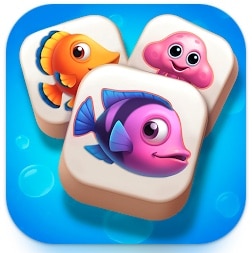 Welcome to my Tile Shark Puzzle Review!
Tile Shark Puzzle, developed by Summer Affica, is another match-3 style game built around a colourful ocean theme. On the surface, it looks harmless enough: match three identical tiles, clear the board, manage your limited spaces, and progress through levels.
But once you scratch beneath the surface, the game quickly reveals what it’s really about — not puzzles, not strategy, and certainly not real rewards.
It’s about ads.
Want to Get Paid for Playing Games on Your Phone?
I tested and compared the best reward apps and sites, so you don't waste time on the fake ones. See which ones actually pay, how low the cash-out minimums go, and which offers are worth your time.
- ✅ Low cash-outs, some from just $1
- ✅ PayPal, gift cards and more
- ✅ Games, surveys and simple tasks
- ✅ Honest tips to avoid tracking problems
Earnings aren't guaranteed and results vary. Treat it as a bonus for time you already spend on your phone.
And a lot of them.
What is Tile Shark Puzzle?
At its core, Tile Shark Puzzle follows a familiar format. You match three identical tiles to eliminate them from the board. You have seven available spaces, which means you need to think ahead. Fill all seven without clearing tiles, and the round ends.
The ocean theme is pleasant enough. Fish, shells, and underwater icons give it a relaxed look, and the gameplay itself isn’t broken.
But very quickly, the game shifts your focus away from the puzzle and toward something else entirely: money.
The “coins to cash” promise
As you play, you start earning coins. The game claims these coins can be exchanged for cash rewards through PayPal.
That alone already raises a question.
How can a simple, free tile-matching game afford to pay players real money?
The answer becomes even more questionable when you look at the numbers being advertised.
Unrealistic rewards everywhere
Tile Shark Puzzle doesn’t just promise small rewards. It goes much further than that.
The app displays:
- A minimum cash-out requirement of £500
- Advertised payouts reaching £5,000
- Daily “lucky player” selections
- A supposed grand prize
- And something it refers to as “dividends”
Yes — dividends.
According to the game, every time you eliminate a tile block, you may receive “dividends” ranging from 1 to 10 coins. On top of that, it claims that every day, 50 lucky players are selected to receive extra dividends — sometimes hundreds at once — with a chance at a grand reward.
It all sounds impressive.
It also makes absolutely no sense.
The problem with the “dividends” narrative
Dividends are a real financial concept. They come from profits generated by real businesses.
A mobile puzzle game funded by ads does not generate dividends.
Using that term in this context is purely cosmetic. It’s meant to make the rewards feel official, structured, and legitimate — even though they are entirely internal numbers controlled by the app itself.
There is no evidence of daily selections, no transparency, no published winners, and no means of verification or accountability.
You’re simply asked to believe it.
The £500 cash-out wall
Eventually, you’ll open the withdrawal page and see the key condition:
you must reach £500 before you can cash out.
This is where many players start grinding.
At first, the progress seems fast. Coins appear often. Notifications pop up. The balance climbs just enough to keep hope alive.
But £500 is not a small target.
And when a game relies on advertising as its main source of income, paying hundreds — let alone thousands — of pounds to players is economically unrealistic.
That money would have to come from somewhere.
And it doesn’t.
Where the real money comes from
Every time you receive a reward, the game encourages you to tap Claim.
Tapping it triggers a video advertisement. The ad may play before or after the reward, or even automatically between levels.
Despite these variations, the pattern remains consistent.
Ads are constant.
That’s the real business model.
Tile Shark Puzzle doesn’t need to pay players anything. It already earns money every time you watch an ad. With enough users, that revenue adds up quickly — especially when people play for hours chasing a payout that never arrives.
The coins, dividends, jackpots, and balances exist for one purpose only:
to keep you watching ads longer.
The illusion of progress
Another familiar tactic appears as you continue playing: progress without outcome.
You see your balance rise. You feel closer to the £500 target. But the closer you get, the slower progress becomes.
Rewards shrink. Coin drops feel smaller. Time invested increases.
This is not accidental.
It’s a classic diminishing rewards system, designed to keep players engaged without ever reaching the finish line.
You’re always “almost there.”
And that’s exactly where the game wants you.
No verification, no transparency
Tile Shark Puzzle presents sweepstakes-style claims, daily winners, and grand prizes — but provides no evidence that any of it is real.
There’s no list of winners.
>No payout screenshots.
>No audit trail.
>No explanation of how winners are selected.
In legitimate sweepstakes or reward programs, transparency is mandatory. Here, it’s completely absent.
Everything happens behind closed doors — controlled entirely by the app.
Is Tile Shark Puzzle legit?
No.
The structure, reward promises, and economics simply don’t support legitimacy.
A free tile-matching game cannot sustainably pay £500 or £5,000 to players, especially when its only visible revenue source is advertising.
The rewards are fictional. The balances are virtual. The payouts are unrealistic.
What is real is the time you spend — and the ad revenue generated from it.
Final verdict
Tile Shark Puzzle may look like a relaxing ocean-themed match-3 game, but the moment it introduces massive cash rewards, dividends, and sweepstakes-style promises, it crosses into illusion territory.
The game relies entirely on ads for income, while encouraging players to chase unreachable targets like £500 and £5,000 payouts.
There is no proof of real winners. No accountability. No sustainable business logic behind the numbers shown on screen.
In the end, it’s not a reward app.
It’s an ad trap disguised as an opportunity.
If you’re playing for fun alone, that’s your choice. But if you’re playing expecting real money, you’re setting yourself up for disappointment.
My recommendation is clear: avoid it at all costs.
Your time is worth far more than fictional dividends and numbers that never leave the screen.
Want to Get Paid for Playing Games on Your Phone?
I tested and compared the best reward apps and sites, so you don't waste time on the fake ones. See which ones actually pay, how low the cash-out minimums go, and which offers are worth your time.
- ✅ Low cash-outs, some from just $1
- ✅ PayPal, gift cards and more
- ✅ Games, surveys and simple tasks
- ✅ Honest tips to avoid tracking problems
Earnings aren't guaranteed and results vary. Treat it as a bonus for time you already spend on your phone.