
Step Cash Review – Is it Fake? Exposing the Truth!
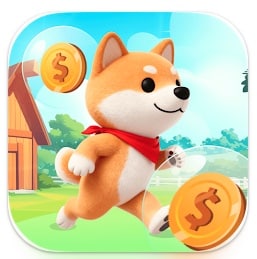 Welcome to my Step Cash review!
The pitch is always the same: “Walk like you normally do, convert steps into cash, withdraw to PayPal.” Simple, effortless, and supposedly profitable.
But once you’re inside Step Cash, it becomes clear that the app isn’t built around paying walkers. It’s built around keeping you engaged and triggering as many rewarded ads as possible, while showing you a fake-looking balance that’s extremely hard (or effectively impossible) to turn into real money.
If you’ve been around reward apps for a while, you’ll recognise the pattern immediately: tiny “earnings” tied to ad views, lots of mini-games to increase session time, big conversion numbers that don’t match any realistic revenue model, and a withdrawal threshold that’s high enough to keep you chasing for weeks.
Want to Get Paid for Playing Games on Your Phone?
I tested and compared the best reward apps and sites, so you don't waste time on the fake ones. See which ones actually pay, how low the cash-out minimums go, and which offers are worth your time.
- ✅ Low cash-outs, some from just $1
- ✅ PayPal, gift cards and more
- ✅ Games, surveys and simple tasks
- ✅ Honest tips to avoid tracking problems
Earnings aren't guaranteed and results vary. Treat it as a bonus for time you already spend on your phone.
Let’s break it down.
What Step Cash claims to be
Step Cash presents itself as a walking reward app. It tracks your steps, then lets you exchange them for cash rewards.
The promise is that your everyday movement becomes money, which is why these apps spread so easily: walking is already something you do, so the earnings feel “free.”
But in practice, Step Cash is not primarily an app that monetises walking. It’s an app that monetises attention.
Walking is just the theme used to justify the reward screen.
How Step Cash actually works
1) “Exchange steps” is basically an ad button
You described the main mechanic clearly:
- The app tracks your steps.
- You tap Exchange Stepsto convert steps into rewards.
- You get “cash rewards” for every 500 steps.
That sounds fair until you notice what happens at the point of reward: it entices you to watch a video ad.
That matters, because it reveals what’s really happening financially:
- You aren’t getting paid because you walked.
- You’re getting numbers because you watched an ad.
The steps are the gating mechanism. The ad view is the monetisation event.
2) The cute dog and coin-tapping loop
Step Cash also uses the “tap the coins on screen” mechanic — in your case, coins around a cute dog — to create constant micro-rewards.
You tap coins, the app gives coin rewards, and it suggests a conversion like:
- 100 coins = $1
That conversion is a giant red flag in itself. Apps can display any conversion rate they want. The question is whether there’s a payout model that can consistently support it.
And again, what’s the next nudge after you collect coins?
3) “Double rewards” = rewarded ads
Just like the cash games you’ve reviewed, Step Cash offers a Double Rewards button. And pressing it triggers another video ad.
This is the core loop:
reward → “double it” → watch ad → repeat
At that point, the app is no longer trying to reward your walking. It’s trying to train a habit:
“If I want progress, I should watch another ad.”
4) Mini-games that exist to keep you watching
You also mentioned the built-in mini-games, such as Lucky Card, Lucky Wheel, and Lucky Shake.
These aren’t here because the app wants to entertain you.
They’re here for one reason: engagement time.
Mini-games do two things extremely well for apps like this:
- They keep you inside the app longer (more chances to show ads).
- They give you a new “reason” to press a button that triggers a rewarded ad.
So now your “walking app” is basically a small casino-style arcade built around rewarded ads, dressed up in step-count branding.
Discover legit reward apps that pay for walking!
Does Step Cash pay?
Here’s the key point you discovered: when you tap the balance/withdraw section, the minimum withdrawal is $50.
That is a huge threshold for this type of app.
A legitimate rewards app that wants long-term trust will usually allow small withdrawals — not because they love giving money away, but because small withdrawals are how they prove the system works. They want users to feel confident, then stay active.
A $50 threshold does the opposite. It creates a long chase that can take ages, and it dramatically increases the likelihood that users will:
- give up before reaching it, or
- keep grinding ads for weeks while the app keeps earning
And here’s the bigger issue: the economics don’t add up.
Why the numbers don’t make sense
If Step Cash is funding rewards mainly through video ads, then each rewarded ad view generates a small amount of revenue for the developer (varies wildly by country and ad type, but it’s not “dollars per ad” for most users).
So ask the obvious question:
How many ads would the app need you to watch to cover $50 for you, plus profit, plus fees, plus all the other users?
The answer is: an absurd number.
That’s why these apps lean on “double rewards,” coin tapping, lucky games, and constant “exchange” prompts. They require volume, repetition, and for you to treat ad-watching as a normal part of your routine.
And even if you do watch a crazy amount of ads, you still have the biggest problem:
The app is not obligated to pay
Even if you reach the displayed $50 target, you’re still at the mercy of whatever the app does at the point of withdrawal. Many apps in this category introduce friction right at the end:
- extra requirements
- delayed “processing”
- sudden verification steps
- reward slowdowns near the target
- “insufficient activity” messages
- or simply no payout
I can’t verify what Step Cash does in every case, but the structure you described is the same structure used by apps that routinely disappoint users: big minimum, ad-heavy progression, and a balance that exists mostly to motivate more ad views.
The real product is your time (and your data)
Even if you ignore the payout question entirely, there’s another angle people forget:
A step-tracking app is collecting behavioural data: your movement patterns, your activity times, potentially location-related signals depending on how it’s implemented, and whatever permissions it requests.
When an app’s business model is “ads + engagement,” you should assume it’s optimising for:
- session length
- ad impressions
- and user data that improves targeting/retention
So if you’re using it, treat it as entertainment—not a financial tool—and be careful about the permissions you grant and the expectations you set.
Bottom line
Step Cash appears as a walking rewards app, but its structure turns it into an ad trap with a step-counter theme:
- You must watch video ads to earn rewards.
- The “Double rewards” feature directly serves as a rewarded ad lever.
- The cute dog coin-tapping and lucky mini-games aim to keep you engaged and watching more ads.
- The $50 minimum withdrawal requirement signals a massive red flag for a product primarily funded through ads.
If you install this expecting to make meaningful money from walking, you will likely feel disappointed.
The most realistic outcome is that you spend time clicking, tapping, and watching ads while the balance creeps up slowly — and the promised payout remains out of reach or unreliable.
If your goal is to earn money online, this is not a smart path. If your goal is just to kill time and you don’t mind ads, fine — but don’t confuse a flashy balance screen with guaranteed cash.
Want to Get Paid for Playing Games on Your Phone?
I tested and compared the best reward apps and sites, so you don't waste time on the fake ones. See which ones actually pay, how low the cash-out minimums go, and which offers are worth your time.
- ✅ Low cash-outs, some from just $1
- ✅ PayPal, gift cards and more
- ✅ Games, surveys and simple tasks
- ✅ Honest tips to avoid tracking problems
Earnings aren't guaranteed and results vary. Treat it as a bonus for time you already spend on your phone.