
Owl Solitaire Review – Advertises $1,800 a Day but Can’t Afford a Logo?
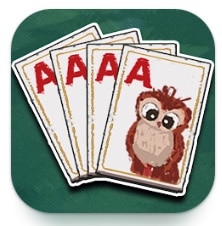 Welcome to my Owl Solitaire review!
Have you ever come across an app that promises to shower you with cash while looking like it was designed during someone’s lunch break? That’s Owl Solitaire, developed by Aquagames.
With over 10,000 installations, it’s already tricking plenty of players into believing they can earn serious money.
The ads boldly claim that you can withdraw without limits, process transactions in one minute, and earn a casual $1,800 a day. Sounds great—until you notice the developer didn’t even bother to invest in a proper logo for the app.
Want to Get Paid for Playing Games on Your Phone?
I tested and compared the best reward apps and sites, so you don't waste time on the fake ones. See which ones actually pay, how low the cash-out minimums go, and which offers are worth your time.
- ✅ Low cash-outs, some from just $1
- ✅ PayPal, gift cards and more
- ✅ Games, surveys and simple tasks
- ✅ Honest tips to avoid tracking problems
Earnings aren't guaranteed and results vary. Treat it as a bonus for time you already spend on your phone.
That’s usually a red flag, and in this case, it’s a glowing neon sign.
So, is this game legit? Spoiler alert: absolutely not. Owl Solitaire is just another fake cash game in disguise, a slick little trap designed to make you watch ads while the developers pocket the revenue. L
et’s break down why this so-called “money-making app” is nothing more than a digital mirage.
👉 Before You Leave Don’t forget to click here to discover the top-rated platform for making money online
What Is Owl Solitaire?
Owl Solitaire is precisely what the name suggests: a solitaire game—nothing revolutionary here—just your classic patience setup with a standard deck of cards. You tap, drag, and stack cards in descending order while alternating colors. Fans of solitaire will feel right at home.
But this game isn’t trying to win you over with its card-playing mechanics. Instead, it waves the promise of big money right in your face.
The app displays a shiny PayPal balance at the top of the screen, and some of the cards in the deck are stamped with the familiar blue PayPal logo. The gimmick is simple: reveal those cards while playing, and boom, you’re supposedly rewarded with cash.
The ads push the fantasy even harder. In one, a woman is in her bed while showing off a PayPal account filled with over $1,000, telling viewers to stay away from fake games and download Owl Solitaire instead.
The irony would be hilarious if it weren’t so shameless.
How Does Owl Solitaire Work?
When you start playing, the illusion kicks in fast. The very first cash card you flip gives you a $40 reward. Not bad for tapping a few cards, right? Then the game cranks up the absurdity: tap the “collect” button, and suddenly you’re told you can claim 5x the amount—$200 in total.
Sounds like the easiest payday ever. But here’s the catch: you can’t cash out until you reach $1,000. That number is conveniently high enough to keep you playing and watching ads for hours.
And it doesn’t stop there. The app also offers a coin system, which appears to be another route to riches. According to the game, 0.98 million coins can supposedly be redeemed for $1,000 gift cards via Visa, Amazon, or Steam.
Of course, this is nothing but smoke and mirrors. No one’s cashing out gift cards here, unless you count the developers redeeming ad revenue while you sit glued to your screen.
As you keep playing, something else happens: the rewards start shrinking. That initial $40 turns into $4, then into pennies. The game strings you along with diminishing payouts, making sure you never quite reach the threshold.
Is Owl Solitaire Legit?
Let’s not dance around it: Owl Solitaire is 100% fake. There’s no money, no PayPal transfer, and no $1,800 a day waiting for you. The app exists for one purpose: to keep you playing long enough to watch an endless stream of video ads.
The business model is painfully transparent. Developers promise impossible payouts to lure you in. Then they slap fake balances on the screen and dangle redemption thresholds you’ll never reach.
The only “limitless withdrawals” here are the hours of your time being siphoned off into their ad revenue machine.
Why It’s So Absurd
Think about it logically. If you could really earn $200 from flipping a few cards, every person with a smartphone would have quit their job already.
If Owl Solitaire were truly paying $1,800 a day, the app wouldn’t have 10,000 installs—it would have billions. And Aquagames, the developer that couldn’t even afford a half-decent app icon, would be one of the wealthiest companies in the world.
Instead, what we have is a developer running false ads, recycling the same tired solitaire gameplay, and slapping on fake balances to squeeze ad revenue out of unsuspecting players.
The Reality of Playing
What actually happens when you sit down to play Owl Solitaire?
At first, it feels exciting. You’re stacking cards, revealing PayPal-branded rewards, and watching your “balance” climb. That first $200 payout gets your hopes up.
But then you realize the finish line is always just out of reach. You need $1,000 to cash out, but the rewards are shrinking with every level. You might also get tempted by the coin system, but the exchange rate is laughable.
Even if you somehow grind all the way to $1,000, you’ll never see a single cent. That’s because the money isn’t real—it’s just numbers on a screen. The developers aren’t handing out cash, they’re handing out illusions.
Conclusion: Don’t Be Fooled
Owl Solitaire is a fake cash game wrapped in a familiar solitaire package. It lures players with flashy ads and fake PayPal balances, then strings them along with diminishing rewards and impossible cash-out requirements. The $1,800 a day prize is pure fantasy, and the claim of instant withdrawals is nothing more than false advertising.
The only ones making money here are the developers, who profit every time you watch an ad. Meanwhile, you’re left wasting your time, staring at numbers that will never turn into real money.
If you downloaded this game hoping for easy earnings, here’s your reality check: you won’t get paid—not even a cent. The best move you can make in this game isn’t stacking cards; it’s hitting the uninstall button.
So next time you see an ad promising cash for playing solitaire, remember Owl Solitaire. Remember the missing logo, the absurd promises, and the fake balances.
And most importantly, remember that if it sounds too good to be true, it’s because it is.
Want to Get Paid for Playing Games on Your Phone?
I tested and compared the best reward apps and sites, so you don't waste time on the fake ones. See which ones actually pay, how low the cash-out minimums go, and which offers are worth your time.
- ✅ Low cash-outs, some from just $1
- ✅ PayPal, gift cards and more
- ✅ Games, surveys and simple tasks
- ✅ Honest tips to avoid tracking problems
Earnings aren't guaranteed and results vary. Treat it as a bonus for time you already spend on your phone.