
Jingle Shelf Review – A Holiday-themed Trap to Avoid?
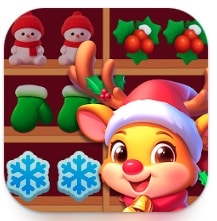 Welcome to my Jingle Shelf review!
Every holiday season, the Google Play Store fills up with festive-looking apps designed to catch your eye. Some are lighthearted puzzle games, others are themed wallpapers, but increasingly we’re seeing a more cynical category:
Christmas-themed “cash reward” games. These apps promise huge payouts if you match items on your screen. One of the latest examples is Jingle Shelf by developer Berga Youcef, which has already reached more than 10,000 installations.
The hook is simple and seductive: play a cheerful elimination puzzle, match festive icons, and supposedly walk away with $1000 or even more.
Want to Get Paid for Playing Games on Your Phone?
I tested and compared the best reward apps and sites, so you don't waste time on the fake ones. See which ones actually pay, how low the cash-out minimums go, and which offers are worth your time.
- ✅ Low cash-outs, some from just $1
- ✅ PayPal, gift cards and more
- ✅ Games, surveys and simple tasks
- ✅ Honest tips to avoid tracking problems
Earnings aren't guaranteed and results vary. Treat it as a bonus for time you already spend on your phone.
At first glance, it is a straightforward way to convert downtime into income. But is there really a jackpot waiting for players at the end of this Christmas shelf puzzle? Let’s dig deeper and find out.
👉 Don’t forget to Click here to discover the top-rated platforms for making extra cash online!
What is Jingle Shelf?
Jingle Shelf resembles many other casual “shelf-style” elimination games, where items are stacked and your task is to match and clear them. The twist here, as always, is the promise of real cash.
When you first launch the app, a bold, glittering message bursts onto the screen: “Win $1000 Cash Reward.” Below it, three steps are displayed in reassuringly simple language:
- Earn money by playing and collecting as much as you can.
- Extract cash once you’ve reached the target.
- Enjoy your money.
It’s a formula we’ve seen countless times before, dressed up in holiday colors. The psychology is clear: by framing the steps as straightforward and inevitable, the game lowers your defenses. It makes you believe that all you need to do is play, and the reward will follow naturally.
Excited, you tap “Start.” Suddenly, a big shelf fills your screen, stacked with brightly drawn items: bells, snowflakes, candy canes, wrapped gifts, and—most importantly—cash icons. The mechanic is the same as every elimination puzzle: when you match the same icons, they disappear. When you manage to match the “cash” items, you supposedly earn real money.
And sure enough, almost immediately, a cash reward flashes across the screen. The first amount is small—something like $1.27—but it’s enough to give you that burst of excitement. Tap the “Claim” button, and you feel like you’ve just made real money. But that feeling is exactly what the developer is banking on.
How Does Jingle Shelf Work?
Like other fake cash games, Jingle Shelf’s strategy is to give players a convincing illusion of progress while quietly trapping them in a cycle of ads. The moment you try to interact with your winnings, the curtain starts to lift.
At first, claiming your rewards feels instant. But soon the “Claim” button begins triggering video ads. Every time you want to collect money, you must watch another advertisement. Multiply this across every little reward and suddenly you’re watching dozens of ads per session. This is no accident—it’s their entire business model.
The game then introduces its first major roadblock: cash out restrictions. After you receive your initial winnings, you will likely be tempted to withdraw them. To cash out, tap the “Cash Out” button. Please note that you must beat level 5 before you can withdraw.
At first glance, that doesn’t sound too bad. Levels 1 through 4 are simple and easily cleared, keeping your confidence high. But once you hit level 5, the game reveals its true colors. The level is designed to be impossible. It’s not a matter of skill, patience, or persistence—it’s rigged against you by design.
This is the developer’s core tactic: dangle the promise of cash, make the early stages achievable, then slam the door shut right before the payout threshold. Players get stuck at level 5 and repeatedly replay the game while watching ads over and over.
The Psychology Behind the Trap
The strategy behind Jingle Shelf—and many games like it—is rooted in behavioral psychology. Here’s how it works:
- Immediate Rewards: That first $1.27 win isn’t about giving you money, it’s about giving you hope. Early wins trick your brain into thinking the system is real and achievable.
- Escalating Costs: As you progress, the cost of claiming rewards increases. Ads start appearing more frequently, stretching out your time commitment and normalizing the grind.
- The Cash Out Barrier: By making withdrawals contingent on reaching level 5, the developer sets a clear goal that feels attainable. But because level 5 is unbeatable, it’s actually a moving finish line you’ll never cross.
- Endless Engagement: Trapped between the hope of withdrawal and the frustration of failure, players keep replaying, convinced that success is just around the corner.
This loop is carefully engineered to keep you watching ads for as long as possible. In reality, you’re not a player—you’re the product, generating ad revenue for the developer while receiving nothing in return.
Is Jingle Shelf Legit?
The answer is straightforward: no. Jingle Shelf is not a legitimate way to earn money. There is no $1000 reward. There is no functioning cash out system.
Even the structure of the game exposes its own fraudulence. The unbeatable level 5 is a dead giveaway. Unlike legitimate apps, where cash out options may at least process (even in tiny amounts), Jingle Shelf doesn’t let you reach that point at all. It blocks you outright, ensuring that no one ever sees a penny.
You find yourself trapped in a continuous cycle of advertisement consumption, cleverly disguised as a holiday puzzle.The festive wrapping doesn’t change the core reality: it’s an exploitation machine.
The Bigger Problem with Fake Cash Games
Jingle Shelf is just another name among the numerous fake reward apps cluttering the Play Store. The problem is that these games prey on people during vulnerable times. For someone struggling financially, the promise of $1000 can feel life-changing. Developers like Berga Youcef know this, and they exploit it ruthlessly.
What’s more troubling is how slow Google is to catch on. Despite clear evidence and player complaints, these apps linger on the store, racking up installs and generating ad revenue. It creates a cycle where dishonest developers are rewarded, while players are left frustrated and misled.
Conclusion
Jingle Shelf by Berga Youcef may look festive and fun, but behind the Christmas theme lies a familiar scam. The game promises $1000 rewards but delivers nothing except frustration and wasted time. Early wins are engineered to hook you, ads are designed to milk you, and level 5 is built to trap you indefinitely.
The truth is simple: Jingle Shelf is not about giving you money; it’s about taking your time. The only wallet that fills here is the developer’s, fed by the ad revenue you generate every time you chase a fake reward.
If you’re genuinely looking for ways to earn money online, avoid this app at all costs. Your time is valuable, and Jingle Shelf is nothing more than a holiday-themed trap.
Want to Get Paid for Playing Games on Your Phone?
I tested and compared the best reward apps and sites, so you don't waste time on the fake ones. See which ones actually pay, how low the cash-out minimums go, and which offers are worth your time.
- ✅ Low cash-outs, some from just $1
- ✅ PayPal, gift cards and more
- ✅ Games, surveys and simple tasks
- ✅ Honest tips to avoid tracking problems
Earnings aren't guaranteed and results vary. Treat it as a bonus for time you already spend on your phone.