
Bitcoin Splash Review: Legit Micropayments or Just Another Ad Trap?
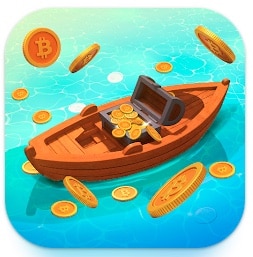 Welcome to my Bitcoin Splash review!
Bitcoin Splash is one of those “earn Bitcoin while you play” mobile games that looks harmless… right up until you realise the whole design is built around a timer, reward prompts, and—surprise—ads.
On Google Play, it’s listed as Bitcoin Splash by MOBILE ESPORTS Sp. z o.o., with 10k+ downloads and last updated 17 Dec 2025.
Now, to be fair: unlike the truly scammy “£1 per coin” fantasy apps, Bitcoin Splash isn’t even pretending you’re getting rich. It’s closer to a “micropayments for attention” model: you play quick sessions, watch ads to multiply rewards, and (in the script you provided) the sats were sent to a ZBD/Zebedee wallet quickly.
Want to Get Paid for Playing Games on Your Phone?
I tested and compared the best reward apps and sites, so you don't waste time on the fake ones. See which ones actually pay, how low the cash-out minimums go, and which offers are worth your time.
- ✅ Low cash-outs, some from just $1
- ✅ PayPal, gift cards and more
- ✅ Games, surveys and simple tasks
- ✅ Honest tips to avoid tracking problems
Earnings aren't guaranteed and results vary. Treat it as a bonus for time you already spend on your phone.
But the key question stays the same: is this a game that pays you, or an ad engine that tolerates you?
What is Bitcoin Splash?
The Play Store description sells it as a casual “coin-hunting adventure” where you float upstream, collect coins, fill a treasure chest and unlock new stages across rivers and seas.
So the “game” layer is basically a light arcade loop. The “money” layer is the real hook: it tracks rewards in sats (satoshis, tiny fractions of Bitcoin) and nudges you toward “one more run” with a very deliberate structure: short sessions + constant collection + ad-based multipliers.
If you’ve reviewed enough reward apps, you already know why that structure exists: short sessions create more “reward moments,” and reward moments create more ad prompts.
How does Bitcoin Splash work?
From your script, the whole gameplay revolves around a 30-second countdown.
- You launch the game and immediately see a timer counting down from 30 seconds.
- You swipe your finger around the screen to collect floating coins and chests.
- Some coins have a “health bar,” so you’re not just collecting—you’re “damaging” coins like they’re enemies (which is… a choice).
- When the timer ends, the app prompts you to collect what you’ve earned, then immediately tries to upsell you to watch an ad to multiply your reward.
Then you get the side systems:
- A leaderboard (which, realistically, is decoration—because the payout is not “skill-based prize money,” it’s “ads → tiny sats”).
- Upgrades for your ship: swipe damage, coin value, coin speed, and coin frequency.
- Abilities that can be activated by… yes… watching ads.
- Chests that also prompt ads.
So your “progression” is basically two tracks happening at once:
- Game progression (upgrades, areas, cosmetic variety)
- Ad progression (more prompts, more multipliers, more “watch this to get that”)
And that second track is the real business model.
Who is the developer?
The developer shown on Google Play is MOBILE ESPORTS Sp. z o.o.
Their own site describes Mobile Esports as a platform for free-to-play tournaments and “win real prizes,” and they explicitly say they’re “powered by advertisers, sponsors and gaming partners.”
So they’re not shy about the underlying economics: ads fund the ecosystem.
Also notable: their privacy policy states Mobile Esports and BoomBit S.A. are “joint controllers” of personal data (so there’s a bigger corporate structure behind the games).
Data safety, privacy, and encryption
This is the part most people skip because it’s not exciting. It should be.
On the Play Store’s Data safety section, Bitcoin Splash states:
- It may collect data types including Personal info and Financial info (and other categories).
- Data is encrypted in transit.
- You can request that data be deleted.
“Encrypted in transit” is good—meaning data sent between your device and their servers is protected while moving. But that phrase does not automatically mean “everything is encrypted everywhere all the time.” It doesn’t guarantee encryption at rest, it doesn’t guarantee that third parties won’t receive your data, and it doesn’t stop you from being profiled for ad targeting.
And if you read the developer’s privacy policy, you’ll see they collect a lot of typical ad/analytics identifiers (device info, IP address, ads viewed/clicked, gameplay attempts, etc.) and list a long roster of ad and analytics partners.
They also explicitly list Zebedee among “Trusted Partners.”
So the realistic way to think about this is:
You’re not just “playing a Bitcoin game.”
You’re participating in a tracked advertising ecosystem, with a Bitcoin-themed reward layer on top.
That doesn’t automatically mean “danger.” But it does mean you should be picky about what you share, what permissions you grant, and whether you want yet another app building a profile around your attention.
Does it pay?
Now the part everyone cares about.
In the test described in your script, after one hour of play, the result was:
- 80 satoshis earned in total
- credited to a Zebedee/ZBD wallet within about 2 minutes
- roughly $0.07 for that hour
That’s actually an important distinction from the obvious fake “cash games”: this is framed as a micro-rewards system that can actually update a wallet. And ZBD is a known Bitcoin rewards wallet/app in this space.
But here’s the brutal part:
Seven cents an hour is not “earning.” It’s a rebate.
A rebate for letting your phone become an ad screen.
And the game is engineered to make those seven cents feel like progress by attaching them to:
- upgrades
- new areas
- timers
- leaderboards
- multipliers
It’s the same psychology as the worst reward apps, just with slightly more honesty about the scale.
Also, if the payout is tied to ads and reward rates, your results can vary massively by country, ad inventory, account history, and how aggressively the app throttles rewards over time. So even if one test shows quick wallet credit, that doesn’t magically make the model “worth it.”
It just means the app can afford to pay a tiny amount to keep you engaged—because the ads likely bring in more than they give back.
Conclusion
Bitcoin Splash is not the cartoon-villain scam where it promises £500 a day and then demands Level 48. It’s something quieter and (arguably) more effective:
A simple arcade loop that turns your attention into ad revenue and shares a sliver of that value back as sats.
If you treat it like:
- “A casual game that throws you tiny Bitcoin dust for entertainment,” fine.
If you treat it like: - “A way to make money,” it’s basically a comedy sketch where the punchline is your time.
And on the data side, yes, it claims to support encryption in transit on Google Play, which is a minimum standard nowadays.
But it still sits inside an ad/analytics ecosystem, and the privacy policy makes it clear they work with many partners for advertising and measurement.
So the real recommendation is simple:
Play it if you genuinely enjoy it.
But don’t confuse a functioning micropayout with a good use of your life.
Want to Get Paid for Playing Games on Your Phone?
I tested and compared the best reward apps and sites, so you don't waste time on the fake ones. See which ones actually pay, how low the cash-out minimums go, and which offers are worth your time.
- ✅ Low cash-outs, some from just $1
- ✅ PayPal, gift cards and more
- ✅ Games, surveys and simple tasks
- ✅ Honest tips to avoid tracking problems
Earnings aren't guaranteed and results vary. Treat it as a bonus for time you already spend on your phone.