
Best Machines to Make Money in 2025: From Real Assets to Digital Goldmines
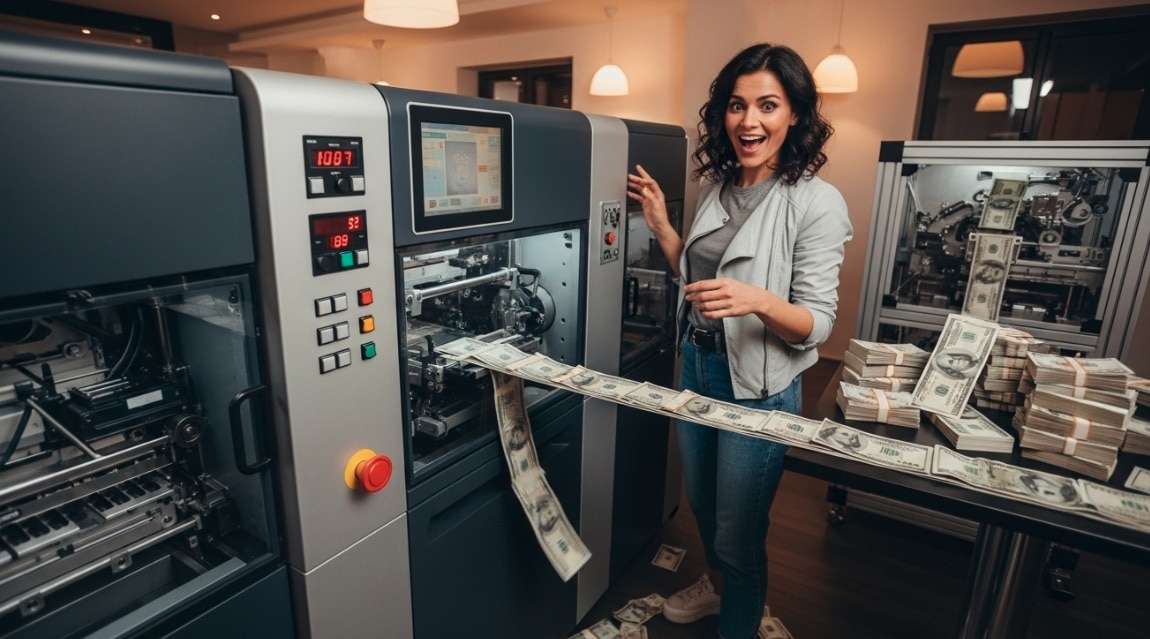 Close your eyes and imagine this for a moment.
It’s 3 AM. You’re deep in sleep, dreaming peacefully. But while you’re completely unconscious, tucked under your warm blankets… money is flowing into your bank account.
A customer in Chicago just bought a candy bar from your vending machine. Cha-ching – $1.50 profit.
Someone in Texas withdrew $200 from your ATM. Cha-ching – $3.00 transaction fee.
Want to Get Paid for Playing Games on Your Phone?
I tested and compared the best reward apps and sites, so you don't waste time on the fake ones. See which ones actually pay, how low the cash-out minimums go, and which offers are worth your time.
- ✅ Low cash-outs, some from just $1
- ✅ PayPal, gift cards and more
- ✅ Games, surveys and simple tasks
- ✅ Honest tips to avoid tracking problems
Earnings aren't guaranteed and results vary. Treat it as a bonus for time you already spend on your phone.
A family in Florida just used your car wash. Cha-ching – $18.00 revenue.
Your wealth increased despite you not lifting a finger, answering a phone call, or serving anyone. You were literally unconscious.
This is not a fantasy. This is the reality of passive income, and thousands of regular people are living it right now.
Why Passive Income Changes Everything
We’ve all been sold the same lie: work hard, trade your time for money, repeat for 40 years, then retire.
But here’s the brutal truth about traditional employment: You have only 24 hours in a day, your income has a ceiling, you stop working, and you stop earning. One illness, one layoff, and your income vanishes. You’re building someone else’s dream while your boss gets rich and you get a paycheck.
Passive income breaks this cycle. It’s money earned with minimal ongoing effort – income that flows even when you’re sleeping, traveling, or spending time with family.
The American Dream is Evolving
The old American Dream was owning a house with a white picket fence and a stable 9-to-5 job.
The new American Dream? Building income streams that work for you 24/7/365. Waking up to more money than you went to bed with. You can enjoy the freedom to choose how to spend your days without being chained to a desk.
According to recent data, 46% of Americans are starting side hustles to build passive income and diversify their income sources to meet their financial needs.
Why? Because they understand what the wealthy have known for decades:
“If you don’t find a way to make money while you sleep, you will work until you die.”– Warren Buffett
But Here’s What Nobody Tells You
Not all passive income is created equal. The internet is flooded with gurus promising $10,000/month with “zero work” and “no money down.” That’s garbage.
Real passive income requires initial investment, an innovative strategy, and ongoing maintenance. Truly 100% passive doesn’t exist. But here’s the beautiful part: the right machines can get you close.
In 2025, technology has made passive income more accessible than ever before. Gone are the days when creating income streams required massive capital investments or specialized technical skills.
Modern automated businesses offer lower barriers to entry (as low as $200), remote monitoring from your phone, proven business models, scalability, and recession resistance.
What You’re About to Discover
In this guide, I’ll show you 15 machines making regular people rich in 2025, focusing on the USA market, where opportunities are most significant, data is most reliable, and profit margins are highest.
You’ll get real startup costs, actual income potential, time investment truth, and real case studies. No fluff. Just actionable information you can use starting today.
Let’s dive in.
MACHINE #1: VENDING MACHINES
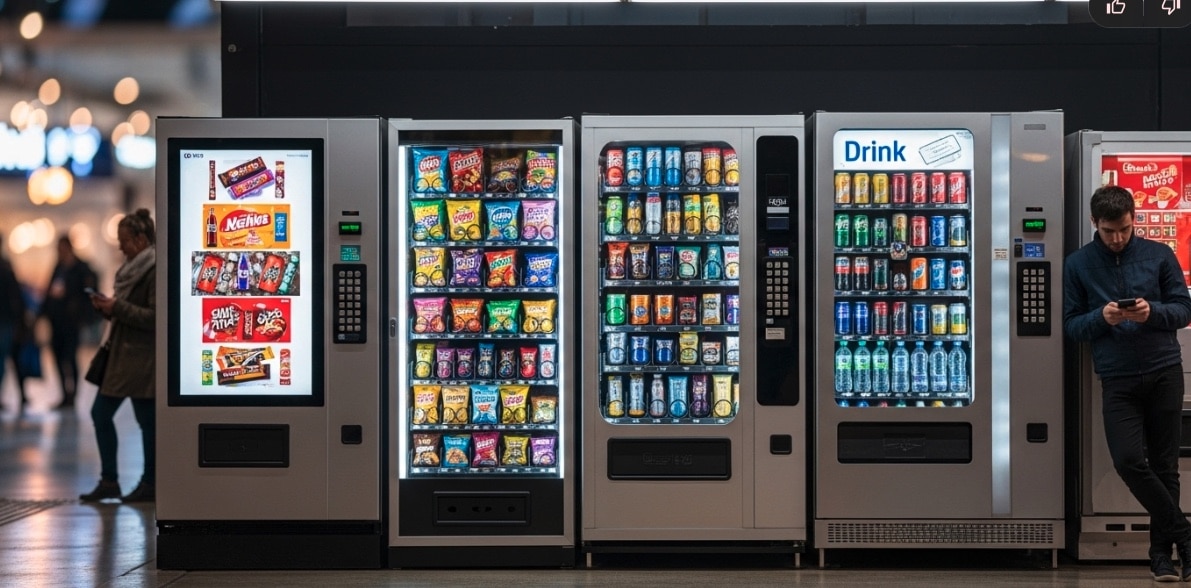
Walk into any office building, hospital, or gym in America, and you’ll find them scattered throughout the hallways: humble vending machines dispensing snacks and drinks on demand.
Despite their old-school reputation, these machines continue to thrive. In fact, the global vending machine market is projected to reach $25.25 billion by 2027, growing at 6.7% annually.
The Surprisingly Low Startup Cost
What makes vending particularly attractive is the barrier to entry.
Unlike most businesses demanding thousands in startup capital, you can begin with just $200. Simple candy machines sell for as little as $200 brand new, and one machine can pull in $15 to $40 per month when placed in the right location.
Maintenance runs so easily that teenagers commonly use them as their first business.
Now, $15 to $40 monthly might sound underwhelming at first. However, consider the math more carefully.
That $200 machine, which generates $30 per month, pays for itself in 7 months. After that point, every dollar flows directly to your pocket.
Moreover, the real power emerges when you scale. One machine brings $30 monthly. Ten machines deliver $300 monthly. Twenty machines pump out $600 monthly.
Full-Sized Machines: Where Real Money Lives
This scalability becomes even more compelling when you move to full-sized units. While candy machines serve as your entry point, full-sized snack and drink machines unlock serious income.
These units require a higher investment—typically $3,000-$7,000 new or $1,200-$3,000 used—but they generate $300-$1,000 per machine per month.
The margins explain why operators love this business. A 12-ounce bottle of water costs less than $0.50 wholesale but sells for $2 in your machine.
A small bag of chips costs $0.35 and sells for $1. That translates to 200-400% markup, which few other businesses can match.
The Honest Truth About “Passive”
Nevertheless, we need to address reality head-on. Vending machines don’t run themselves completely.
You’ll need to restock them every week or two, which typically takes 2-3 hours depending on your route size. Occasionally, something breaks down—a coin mechanism jams or a motor stops working.
Despite these realities, the business still qualifies as passive because the machines work around the clock while you don’t.
While you sleep, work your day job, or vacation with family, people keep buying. You don’t need to stand there making sales. The money simply keeps flowing.
Passive Score: 6/10
Location Makes or Breaks Your Success
Location determines everything in vending. A machine sitting in a bad spot collects dust. Conversely, a machine in a great location needs restocking twice weekly because it sells so fast.
Smart operators target office buildings, gyms, hospitals, schools, hotels, and laundromats.
Your pitch stays simple: “I provide free vending service, handle everything, and share 10-20% of revenue with you.” Most property owners say yes because you’re offering complimentary amenities.
Real Success Story: How Jason Built $78K Annual Income
Jason M., a 32-year-old IT consultant from Atlanta, started with just $4,200—his tax refund. He bought two used machines and placed one in a co-working space and another in his apartment complex lobby.
Month one brought $450 profit after restocking costs. Within six months, he’d scaled to eight machines, earning $2,400 monthly.
By month 18, he operated 35 locations, generating $4,000- $6,500 per month. He paid off $80K in student debt and quit his job. Today, his route generates $78K in annual revenue.
His biggest lesson? Focus on B2B locations—offices and gyms convert better than public spaces because they have captive audiences who need convenient snacks.
What Success Actually Looks Like
Starting small means investing $1,000 in five candy machines, earning $100-$150 monthly while spending just five hours monthly managing them. You then reinvest profits to scale.
Mid-level success involves $15,000-$20,000 in 5-7 full-sized machines, generating $1,500-$3,500 monthly and $18,000-$42,000 annually. You spend 10-15 hours monthly managing your route.
Full-time scale requires $50,000-$80,000 invested in 20-30 machines, generating $5,000-$10,000 monthly and $60,000-$120,000 annually. Importantly, you work just 20-30 hours monthly—not 160+ hours like a traditional job.
Should You Start with Vending?
This machine works perfectly if you have $200-$5,000 to start, can handle 5-15 hours monthly, want to test passive income with low risk, and you’re willing to scout locations.
Skip it if you demand 100% hands-off income or you’re not willing to do any physical work. Remember, vending machines won’t make you a millionaire overnight, but they absolutely generate reliable, semi-passive income that grows over time.
MACHINE #2: ATM MACHINES
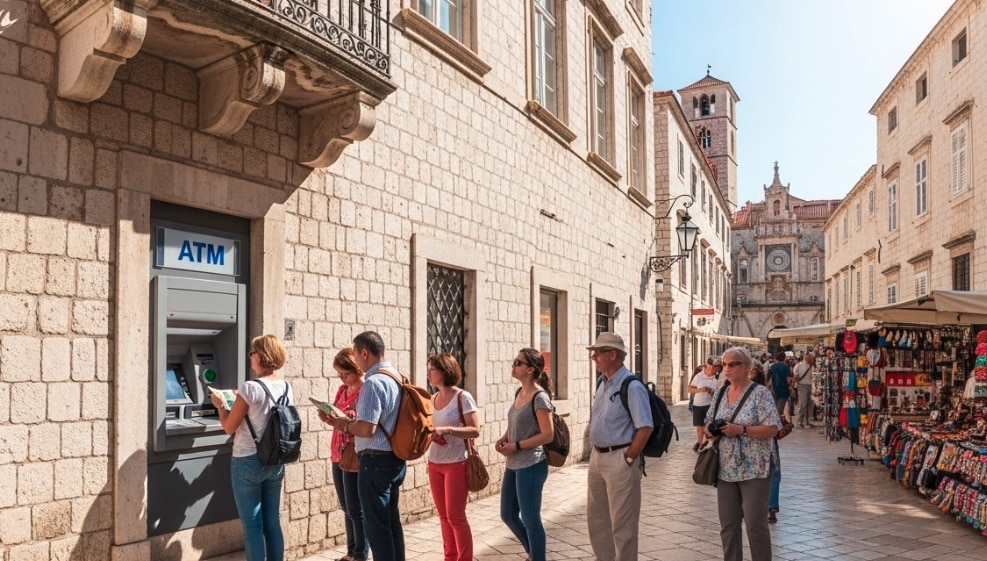
Think about the last time you needed cash. You found an ATM, withdrew $40, and paid a $2.50 surcharge. That $2.50 went to the owner of that ATM.
Despite the hype around digital payments, cash remains king in many situations. Sixty percent of small US transactions still use cash. Bars need it for tips. Food trucks run on it. Convenience stores see it for lottery tickets.
ATMs process over 5.5 billion transactions annually in the US, with each machine averaging 300-500 transactions monthly. Journée Mondiale When you own the machine, you keep 100% of that surcharge.
The Real Investment Required
Starting costs $2,500-$5,000 per machine, plus you’ll need $1,500-$2,000 in cash to stock it initially. This cash isn’t an expense—it’s working capital that cycles through transactions.
Monthly earnings increase based on the number of transactions. For 100 transactions, your income ranges from $200 to $400.
Handling 250 transactions results in earnings between $500 and $1,000. Achieving over 400 transactions yields a monthly collection of $800 to $1,600.
A well-placed ATM with 15-30 transactions per day can generate $20,000 to $30,000 in extra income per year.
Two Revenue Streams You’re Getting
Most people know about surcharge fees—the $2-$4 customers pay per transaction.
However, banks also pay approximately $0.30-$0.60 per transaction through card networks, providing a secondary income stream many beginners overlook.This interchange fee adds up significantly over time.
Why ATMs Beat Vending for Passivity
ATMs run even more passively than vending machines. You’re not managing inventory beyond cash. Nothing spoils. You won’t deal with “this flavor doesn’t sell” problems. No expiration dates exist to check.
Modern machines report status remotely through apps. You receive alerts when cash drops below your threshold. The only real work involves replenishing cash every 1-2 weeks and occasional troubleshooting.
Passive Score: 7/10
Prime Locations for Maximum Profit
ATM owners place machines where high foot traffic meets cash demand: convenience stores, liquor stores, gas stations, cash-only restaurants, bars and nightclubs, strip malls, festivals and events, casinos, hotels, and laundromats.
In 2025, the sweetest opportunities exist at bars (tips and cover charges), food truck clusters (vendors prefer cash), local events and festivals, dispensaries (still largely cash-only), and small ethnic grocery stores with cash-heavy customer bases.
Real Success: Paul Alex’s ATM Empire
Paul Alex started seven years ago and now reports: “My 30-machine ATM business requires just part-time hours while generating over $10,000 monthly in net profits.” New York Post
His journey followed a methodical path. Year one started with one machine at a nail salon, generating 167 transactions monthly at $3 per surcharge. After costs, he netted $500 monthly—$6,000 annually for a 286% ROI on his $2,100 investment.
In year two, he added four more machines at bars and stores—five machines, in total, brought in $2,500 monthly—$30,000 annually.
Year three scaled to nine machines. Today, he earns $120,000+ annually from an initial $10,500 investment. That’s over 1,000% cumulative ROI working part-time hours.
Paul’s biggest lesson? “Start with one machine in a proven location. Don’t scale until you know it works. Invest in self-education—my first machine paid for the next, and so on. I never took on debt.”
How to Actually Get Started
First, form an LLC to protect your personal assets. Second, save $5,000- $8,000 for your machine and working capital. Third, buy your first ATM—new units cost $3,500-$5,000, used ones run $2,500-$3,500.
Fourth, find a high-traffic location using your pitch: “I provide free ATM service. It brings customers to your store, increases average transactions, I handle everything, and we split fees 70/30.” Most small businesses agree because it costs them nothing while adding customer value.
Fifth, install and activate your machine. Some units plug and play; others require professional installation, costing around $200. Stock with $2,000-$5,000 cash initially. Sixth, monitor remotely and refill every 1-2 weeks, depending on volume.
Finally, prove your model works before scaling. Don’t buy your second machine until your first runs profitably for three months.
The Challenges You’ll Face
Cash management presents the biggest challenge. You’re handling thousands in cash weekly. Use good security practices—vary your routes and timing. Consider armored courier services once you scale beyond 10 machines.
Finding a bank that wants your business can be challenging since ATM processing competes with their business. You may need a small bank or credit union.
Regulations vary by state. Some require ISO certification costing $100-$500. Technical issues happen—paper jams, card reader errors, software glitches. You’ll need a repair contact or learn basic troubleshooting.
Should You Choose ATMs?
This machine works if you have $5,000-$10,000 to start, want higher returns per machine than vending, feel comfortable handling cash, and desire more passivity than vending offers.
The math proves compelling. One machine generates $500 monthly. Ten machines deliver $5,000 monthly—$60,000 annually with just 15-20 hours of monthly work.
MACHINE #3: PHOTO BOOTHS

The last wedding you attended probably featured a photo booth in the corner. People lined up with props, laughed, made memories, and walked away with printed photos.
Someone owns that booth and just made $600-$800 for showing up to a party.
Photo booths have exploded from mall novelties to must-have event entertainment. The profit margins run incredibly high. However, I need to tell you upfront: this is NOT passive income, at least not initially.
Three Investment Levels to Consider
Budget setups cost $3,000-$5,000 and include a DSLR camera, lighting, tablet, printer, props, and backdrop. This gets you booking events immediately.
Professional setups run $6,000-$10,000 and include enclosed booth frames, touchscreens, faster printers, premium lighting, and multiple backdrop options.
Premium setups cost $10,000-$15,000 and deliver top-tier everything—professional branding, best equipment, possibly 360-degree cameras or slow-motion features.
What You Actually Earn Per Event
A typical 3-hour wedding rental goes for $500-$700. Four-hour corporate events bring $700-$1,000. Full-day events earn $1,200-$1,500. Corporate clients pay premium rates—$1,500- $2,500—because they have larger budgets and want their logos everywhere.
Running the numbers reveals the potential. Book 4 events monthly at an average of $600 each, and you gross $2,400. Eight events bring $4,800. Get really busy during wedding season and book 12 events for $7,200 monthly revenue.
After expenses—photo paper, ink, gas, insurance totaling $300- $400 monthly—you pocket $2,000-$6,800, depending on bookings. That’s $24,000 to $81,600 annually from weekend work.
The Time Investment Reality
Here’s what Saturday looks like. A wedding is scheduled for 6 PM. First, your car is loaded at 4:30, and you arrive at 5:15. Then, setting up takes 30-45 minutes. You stay present for 3-4 hours, troubleshooting and assisting guests. The event ends at 10, you pack for 30 minutes, and you’re home by 11:15.
The total time invested is 6-7 hours from start to finish. This isn’t “set it and forget it.” Instead, you’re physically present, managing the booth, and interacting with people.
Passive Score: 3/10
The Strategic Play for Wealth Building
So why include photo booths in a passive income guide? Because they serve as your wealth accelerator.
Consider this path: You invest $5,000 in a booth. Your first event pays $600. After expenses, you pocket $500—that’s 10% of your investment back in one event. Complete 10 events, and your booth pays for itself completely.
Here’s where it gets smart. Months 1-3, you do 2-3 events monthly, making $1,200-$2,000 while saving most of it. Months 4-6, you scale to 4-6 events monthly, making $3,000-$4,000 and banking $2,500-$3,500.
Month 7 becomes your pivot point. You take that saved $10,000-$15,000 and buy ATMs or vending machines.
Now, passive income starts flowing while you continue with photo booths. In Year 2, you hire event staff at $20- $25 per hour. Your $600 event becomes $500 profit after paying $100 for staff, but you’re not there anymore.
Types of Events You’ll Book
Weddings dominate as your bread and butter. May through October wedding season can generate $30,000-$50,000 alone. However, smart operators diversify.
Corporate events pay the most—holiday parties, company anniversaries, trade shows. These clients have budgets and book in advance.
Milestone birthdays (Sweet 16s, quinceañeras, 30th/50th birthdays) bring good money. School proms and graduations create opportunities.
Bar and Bat Mitzvahs in areas with Jewish communities prove golden. Holiday parties from November through January supplement wedding income.
Diversity ensures year-round income rather than feast-or-famine cycles.
Real Success: maydaybutton’s Photo Booth Hustle Empire
maydaybutton started 12 years ago and now reports: “My 9-booth photo booth rental business requires just a few hours daily while generating $340,677 in owner’s discretionary earnings annually.”
His journey didn’t happen overnight—it grew step by step.
He began nearly a decade ago with a single photo booth for weddings and local events.
The first two years were rough; after equipment and marketing costs, he lost around $50,000, turning his initial $25,000 investment into a costly lesson.
By the third year, things shifted. He added more booths, targeted corporate clients, and mastered SEO instead of paying for ads. That strategy turned the business profitable, bringing in over $100,000 a year and around $40,000 in net income.
Each profitable booth funded the next, and over time his setup grew to nine booths—including 360-degree and DSLR units—operated part-time with a small team.
By 2024, the company earned $507,275 in revenue and $340,677 in discretionary earnings, a remarkable 67% profit margin.
“Do your market research,” he says. “Follow trends like 360 booths, invest in quality gear, and focus on SEO for free leads. Once a booth turns a profit, use it to buy the next—never take on debt.”
Today, his once-small side business generates well over six figures in annual profit, proving that even a simple machine can become a serious wealth engine when paired with patience and smart reinvestment.
Should You Add Photo Booths?
This machine works if you want serious money fast (the highest hourly rate of all options), feel comfortable at events dealing with people, have weekends available when most events happen, and want to accelerate your passive income journey by 2-3 years.
Skip it if you demand hands-off income from day one, hate working weekends, find social events draining, or want the simplest possible business.
My recommendation? Use photo booths as your cash generation engine. Deploy that capital into truly passive machines, like ATMs and vending machines.
Within 2-3 years, hire it out and make photo booths semi-passive, too. It’s the fastest path to replacing your job income while building real wealth.
MACHINE #4: LAUNDROMATS
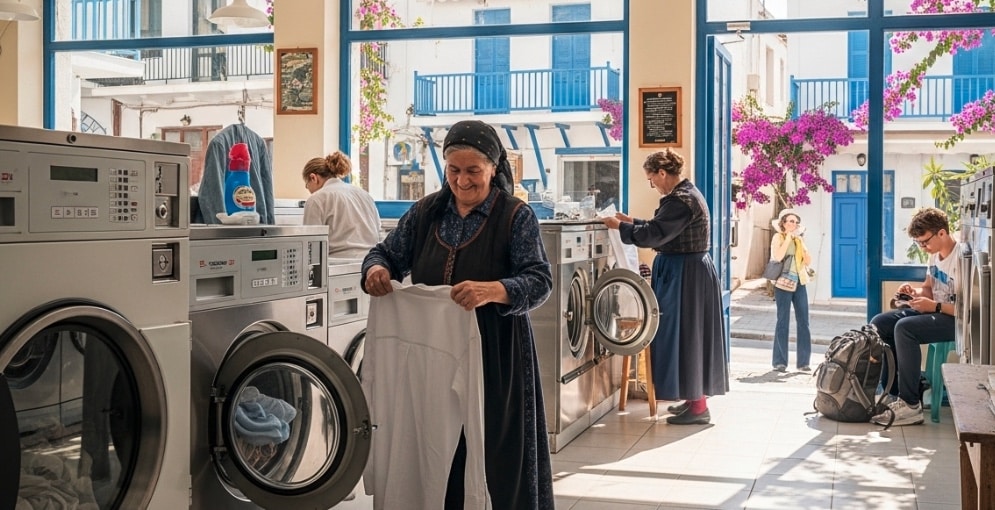
Laundromats carry this reputation as the ultimate passive income. “Just collect quarters once a week!” people say. However, the common narrative says all you do is collect money from machines periodically, and the rest runs on autopilot. But is that story true?
The short answer: not really. Let me explain why this matters before you invest serious capital.
The Substantial Investment Required
Starting a laundromat demands real money. You’re looking at $200,000 to $500,000 for an average-sized location of 2,000 square feet.
This investment covers the purchase or lease of property, the purchase of commercial-grade machines, renovation costs, and working capital. That’s not small-business money!
Income Potential Varies Dramatically
Despite the high investment, income potential can justify the cost. The annual gross income of a single laundromat can vary from $30,000 to $1 million. However, expenses can range from 65% to 115% of the gross income.
Therefore, if you gross $30,000 yearly, net profit ranges from $10,500 at best to losing $4,500 at worst.
Conversely, if you gross $1 million yearly, profit could reach $350,000 at the highest or $150,000 at the lowest.
Everything depends on how you manage expenses.
The Time Investment Reality
Laundromat owners can expect to spend about 5 hours per week managing their laundromat, which can be reduced further by leveraging laundromat management software. That sounds reasonable until you consider what those five hours involve.
Expect to handle the everyday realities of the business. Machines will break—and fixing them is part of the job.
Supplies like detergent, change, and paper products need regular restocking. Customers will occasionally complain about jammed machines or lost quarters, and you’ll need to respond quickly to keep trust.
The space must stay clean, well-lit, and safe, while security measures help deter vandalism or theft.
Although it may sound like you can step back and start collecting effortless income, that is not the case. You have to get involved actively regularly with maintenance, customer issues, and daily operations.
Passive Score: 5/10
Making It More Passive with Technology
Modern technology helps significantly. Technological advancements, such as cashless payment systems and remote monitoring, simplify operations and increase the laundromat’s potential for passive income.
Additionally, smart operators use card-operated machines instead of dealing with coins.
They install remote monitoring systems that alert them to machine malfunctions.
Furthermore, they hire part-time attendants or cleaners to handle daily tasks. They automate financial reporting through specialized software.
However, each of these solutions reduces your profit margins.
Location Determines Everything
Placing your laundromat near college campuses, apartment complexes, or densely populated neighborhoods ensures a consistent flow of customers without needing heavy marketing.
Demographics are crucial. Areas with renters, rather than homeowners with their own machines, are ideal. Neighborhoods lacking in-unit laundry are preferred. Locations with high population density and limited competition are desired.
The Strategic Approach
Laundromats can be structured to run with minimal involvement if you plan smartly by hiring part-time cleaners, attendants, or even a manager; contracting service vendors for machine maintenance; and using modern automated systems and analytics tools.
This approach works, but it transforms your investment equation. Hiring staff costs money. Maintenance contracts reduce profits. Management software requires monthly fees. Suddenly, your passive income becomes less impressive after all expenses.
Should You Invest in Laundromats?
This machine works if you have serious capital ($200,000-$500,000), want a semi-passive business with strong cash flow potential, can handle ongoing involvement (minimum 5+ hours weekly), and understand you’re buying a real business rather than a money printer.
Skip it if you’re looking for low-investment passive income, want something truly hands-off, or expect to collect money without any ongoing work.
Laundromats can generate significant income—$10,500 to $350,000 annually, depending on scale and management—but they demand substantial upfront capital and ongoing attention.
This isn’t a beginner’s passive income play. It’s a serious business investment.
MACHINE #5: CAR WASHES
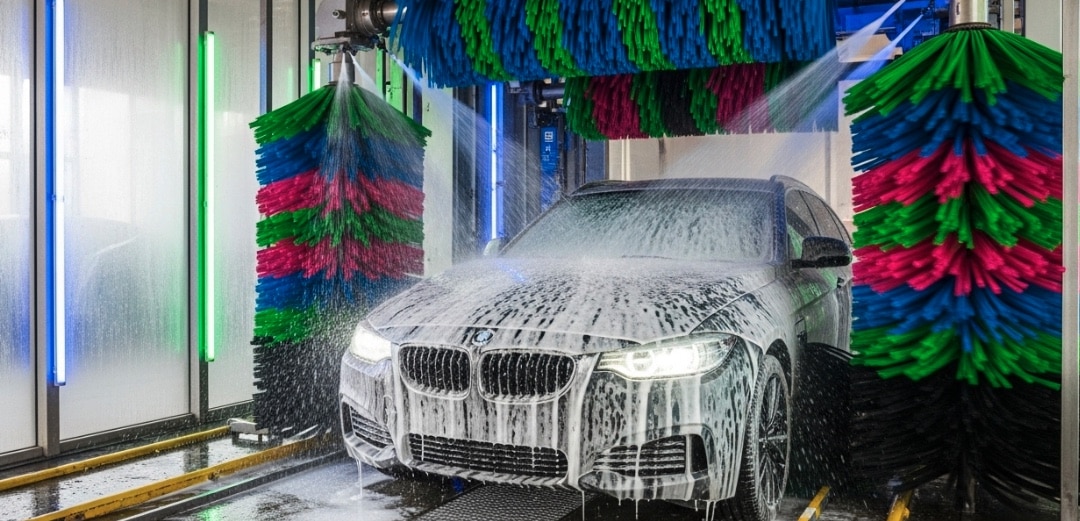
Imagine owning a business where customers literally pay you to clean their own cars (self-service) or where machines handle everything automatically while you monitor from home. That’s the appeal of owning a car wash.
The car wash industry is growing at a 3-4 percent annual rate, outpacing many other sectors, and provides recession-resilient investment opportunities.
Investment Levels Vary Wildly
Your startup costs depend entirely on which model you choose. Self-service bays cost $80,000 to $200,000 each.
In-bay automatic systems cost $100,000 to $300,000. Full tunnel or conveyor washes range from $500,000 to $2 million. Whether you own or lease the land dramatically affects these numbers.
Strong Profit Margins Attract Investors
Profit margins average 30-60% depending on the type of operation, and a well-located and well-marketed car wash can produce a six-figure annual income while requiring far less day-to-day involvement than other service-based businesses.
Monthly income can range from $4,000 to $15,000+ per location, depending on the setup.
Self-service washes in suburban areas typically generate $4,000 to $6,000 per month. Automatic washes in high-traffic areas can bring in $8,000-$15,000+ per month. Location and traffic volume drive these numbers.
Multiple Revenue Streams Build Income
Smart car wash operators don’t rely on a single income stream.
They build layered revenue models that turn each customer into multiple transactions.
The foundation is the standard wash, typically priced between $10 and $20 per vehicle. From there, they upsell premium packages—waxing, tire shine, and undercarriage cleaning—ranging from $25 to $40.
The most profitable tier comes from detailing services, where prices can climb from $50 up to $200 depending on vehicle size and service depth.
Most importantly, they offer monthly membership programs in which customers pay $30- $40/month for unlimited washes, generating predictable recurring revenue.
Some operators have converted 60-70% of their customer base into members, generating tens of thousands in automatic recurring revenue monthly.
These memberships transform the business model. Instead of hoping for walk-up customers daily, you collect guaranteed monthly payments from hundreds of subscribers.
This recurring revenue dramatically stabilizes cash flow.
Real Success: Hannah Ingram’s Self-Run Car Wash Empire
Hannah Ingram started four years ago and now reports: “Doing those calculations, I could see a clear way forward where I’d be able to stay in the green, and that gave me confidence in the investment.” Yahoo Finance
Her journey followed a methodical path. Year one started with purchasing a rundown coin-operated car wash for $140,000 using seller financing, plus $7,500 in upgrades like new brushes and credit card machines.
After costs, she netted a profit in the first month—$66,000 annually projected for a 45% ROI on her $147,500 investment.
In subsequent years, she optimized marketing (ditching radio for social media) and minimal maintenance.
Today, the single location generates $5,500 monthly—$66,000 annually. That’s steady 45% annual ROI with just weekly soap mixes and cash collection.
Hannah’s biggest lesson? “Cut unnecessary costs like outdated ads and focus on simple upgrades—my first improvements paid for themselves in months. I never took on extra debt beyond seller terms.”
Time Investment and Maintenance
Your job involves keeping the site clean, ensuring machines are operational, and restocking supplies. Car washes tend to perform best in high-traffic, high-visibility locations.
With modern automation and remote monitoring, you can manage from your phone. Maintenance can be outsourced to service companies. However, equipment breaks down—and expensive repairs happen regularly. Weather affects volume. You’re managing water usage, environmental compliance, and chemical handling.
Passive Score: 4/10
The Honest Challenges
Starting a car wash business requires a substantial initial investment, covering land acquisition or leasing, purchasing equipment (which varies by type), and operational expenses such as utilities and staff salaries.
Equipment failures cost thousands to repair. Weather patterns directly impact revenue—rainy weeks kill business.
You’re dealing with environmental regulations around water discharge. Chemical handling requires proper storage and safety protocols.
Self-service car wash ownership requires some work each week. If you don’t complete this work, your car wash will fall into disrepair and erode customer trust.
Making It More Passive
Automation reduces labor costs and allows for continuous operation with minimal downtime. Automated systems can be remotely monitored, contributing to the passive nature of the income.
Smart operators hire a site manager to handle daily operations. They use automated payment kiosks that accept credit cards and memberships and implement those membership programs for recurring revenue.
Also, they leverage remote monitoring systems that alert them to issues before customers complain.
Each of these solutions costs money but buys back your time. The question becomes whether the remaining profit justifies your initial investment after paying for all this automation and management.
Should You Invest in Car Washes?
This machine works if you have serious capital ($80,000-$2 million, depending on type), want a high-margin business with recession resistance, can handle significant ongoing maintenance, or can afford to hire management.
You’re willing to manage operations actively or pay someone to do it.
Skip it if you want low-investment opportunities, demand truly hands-off income, or need quick returns on your capital.
Car washes can generate excellent income—$48,000 to $180,000+ annually—with better margins than many businesses. However, they require significant upfront capital, ongoing maintenance, and don’t run passively unless you hire management.
MACHINE #6: SMART COFFEE MACHINES
Americans drink 400 million cups of coffee daily. That’s not a trend—it’s a deeply ingrained habit.
Modern bean-to-cup coffee vending machines aren’t the terrible instant dispensers from decades past. Today’s units grind fresh beans, brew espresso-quality drinks, and accept mobile payments—all in 60-90 seconds.
Investment and Returns
Small commercial countertop units (Necta, DeLonghi Pro) cost $5,000-$12,000. Mid-range kiosks with touchscreens run $12,000-$18,000.
Premium self-serve stations cost $20,000-$25,000. Add $1,000-$3,000 for installation and plumbing. Total startup: $6,000-$25,000.
Coffee margins run exceptionally high. Beans, milk powder, cups, and lids cost 40-45% of sale price. A $3 coffee costs you $1.20-$1.35 to produce, leaving $1.65-$1.80 gross profit per cup.
Typical performance: 60-120 cups daily × $3 average = $5,400-$10,800 monthly gross. After consumables, host commission (10-20%), and maintenance, net profit runs $800-$2,500 monthly per unit. Break-even arrives in 8-18 months.
Time and Passivity
Restock beans, milk, and cups every 2-3 days. Clean brew groups and milk lines regularly.
Monitor remotely via apps showing stock levels, sales, and errors. Service calls cost $100-$250 but stay infrequent with routine upkeep. You manage one machine in 3-5 hours weekly.
Passive Score: 7/10
Prime Locations
Target consistent traffic from caffeine-needing crowds: hospitals and medical centers (24/7 staff and visitors), corporate offices and business parks, universities and colleges, hotel and apartment lobbies, transportation hubs, and auto dealerships.
Approach property managers with free-placement or revenue-share offers (10-30%). Coffee serves as a valued amenity they’re often eager to provide.
Challenges
Quality control matters—poor coffee kills repeat customers. Use premium beans.
Foot traffic risk demands testing locations before buying multiple units. Some states require health inspections if using fresh milk rather than powder. Equipment maintenance requires basic mechanical comfort.
Should You Try Coffee Vending?
This works if you have $6,000-$25,000 to invest, enjoy semi-hands-on business, want income tied to America’s most stable habit, can handle basic maintenance, and have 3-5 hours weekly per machine.
Coffee vending offers one of the best risk-reward ratios—modest capital, proven demand, solid margins.
Skip if you’re uncomfortable with equipment maintenance, expect completely hands-off income, or need immediate returns.
But for most, this represents a genuine “money-printing machine” you can start with reasonable capital and scale one cup at a time.
MACHINE #7: SMART LOCKERS
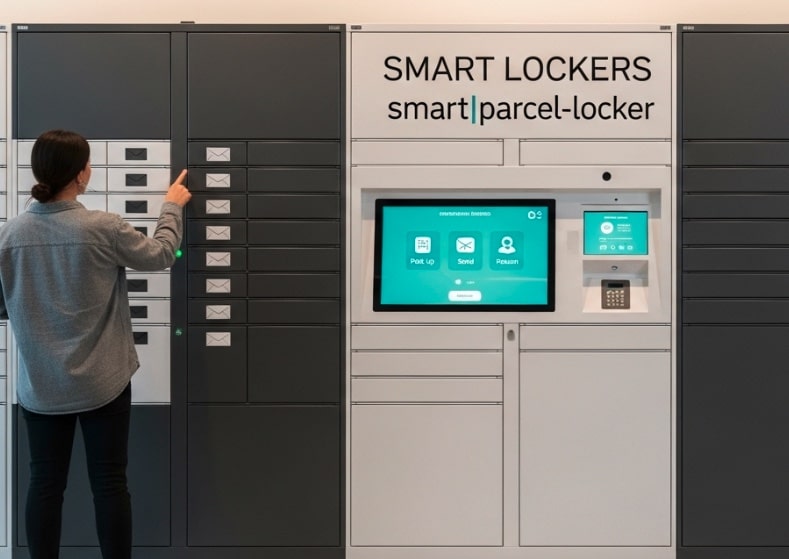
With e-commerce booming and traditional delivery models under pressure, smart locker systems are quietly emerging as a powerful passive‐income machine.
In the U.S., parcel volumes reached about 23.8 billion deliveries in 2024, up roughly 4 % year-on-year.
Meanwhile, the global smartparcel-locker market was valued at approximately USD 1.08 billion in 2024, with North America accounting for over a third of that.
That means the demand and growth tailwinds are very real.
How it works
You install a bank of lockers at a high-traffic site such as an apartment complex, office building, or community hub.
• Delivery drivers drop packages into assigned lockers.
• Residents or customers receive a code or app alert to retrieve their items at their convenience.
• You own the infrastructure and monetise it through location fees, usage fees or advertising.
Typical investment & scale
• A modest system of ~ 20-30 lockers in a residential building: $5,000-$10,000 installed cost.
• A larger commercial deployment of ~ 50-100 lockers: $15,000-$30,000 or more, depending on size, branding and software integration.
These targets align with vendor and industry commentary for locker rollout costs.Parcel Pending+1
Revenue models & sample numbers
You can generate income in several ways:
- Monthly location or amenity fee charged to the property manager (typically $100-$500/month or more depending on building size and tenant volume).
- Usage fee charged per delivery (e.g., $0.50-$2 per parcel) or per pickup.
- Customer pickup fees (for premium service) of $3-$5 or more.
- Advertising revenue on locker screens or nearby panels.
Illustrative scenario: One system at a 200-unit apartment complex chargeable at ~$300-$600/month. If you replicate that across three similar locations, you could see $1,200-$2,400/month in gross income before costs.
Why this machine is high-passive
• After installation, operations mostly run remotely (software alerts for usage, maintenance logs).
• Physical intervention is limited – you may visit every 2-3 months for cleaning, inspection, and simple maintenance.
• Low labour requirement: no attendant required, minimal consumables.
We can score it:
Passive Score: 8/10
Is it right for you?
This model fits if you:
- Have $5,000-$30,000 to invest.
- Are comfortable selling or negotiating with property managers (B2B).
- Want a highly passive recurring income stream, and believe e-commerce and parcel delivery will continue to grow.
It may not be the right fit if you:
- Prefer quick returns (many locker installs pay off in 12-24 months, not overnight).
- Aren’t comfortable doing B2B sales or managing odelocations and logistics.
- Want something ultra-simple without sales/placement effort.
MACHINE #8: CLAW MACHINES

Walk into any arcade, movie theater, or family entertainment center, and you’ll find them: those brightly lit claw machines filled with plush toys and prizes.
Children beg parents for “just one more try.” Teenagers challenge their friends. Adults test their skills after a few drinks. And someone owns those machines, collecting dollar bills 24/7.
Why Claw Machines Work in 2025
Nostalgia drives significant revenue. Adults who played these machines as kids now have children of their own, creating generational appeal.
The instant gratification and low entry cost ($1-$5 per play) make them impulse purchases. Entertainment value exists even when players don’t win—it’s about the experience as much as the prize.
Modern claw machines feature LED lighting, digital payment systems (credit cards and mobile payments), remote monitoring for revenue tracking, adjustable difficulty settings (yes, you control win rates), and themed prizes matching current trends.
Investment Breakdown
New claw machines cost $2,000-$4,000 each, depending on size and features.
Used machines sell for $1,000-$2,500 when operators exit the business or upgrade equipment. You’ll need prize inventory ($200-$500 initially), location agreements (usually on a revenue-share basis), and possibly a business license, depending on your state.
Unlike vending machines, where you’re constantly buying inventory, plush toys cost $1-$3 wholesale, but you can get 10-20 plays before someone wins. Your profit margin on a $2 per play machine runs 85-90% after prize costs.
Location Strategy Makes Everything
Prime locations for claw machines include family entertainment centers and arcades, movie theaters (captive audiences waiting), bowling alleys, pizza restaurants (especially chains like Chuck E. Cheese competitors), laundromats (parents need entertainment for kids), shopping malls, truck stops and rest areas, and tourist attractions.
Your pitch to location owners emphasizes free entertainment for their customers and shared revenue. Most operators offer 20-30% of gross revenue to the property owner. Some locations charge a flat monthly rent ($50-$200, depending on traffic).
Income Reality
A single claw machine in a decent location averages 50-150 plays weekly. At $2 per play, that’s $100-$300 weekly or $400-$1,200 monthly per machine. After prize costs (10-15% of revenue) and location share (20-30%), you net $250-$850 per machine per month.
The beauty lies in scaling. Five machines across different locations generate $1,250- $4,250 per month. Ten machines bring $2,500-$8,500 monthly. Operators with 20+ machines across multiple cities can earn $5,000-$15,000+ monthly.
Time Investment
You’ll visit each machine weekly or bi-weekly to collect money, restock prizes, clean the glass, and perform minor maintenance.
Each visit takes 15-30 minutes. With five machines, you’re spending 3-5 hours monthly on route management.
Add time for purchasing prizes in bulk, handling any repairs, and scouting new locations. Total time investment: 5-10 hours per month for 5 machines.
Passive Score: 7/10
The Prize Strategy
Smart operators understand prize psychology. You stock a mix of easy-to-grab small items (kids’ toys, candy) that keep players engaged and high-value items (brand-name plush, electronics, gift cards) displayed prominently but positioned harder to win.
Players see others winning small prizes and think, “I can do that,” while dreaming of landing the big prize.
Seasonal rotation keeps machines fresh. Holiday themes, movie tie-ins, trending characters—staying current drives repeat play. You buy prizes wholesale from companies like US Toy, Oriental Trading, or directly from Chinese manufacturers on Alibaba for the best margins.
Adjusting Difficulty and Win Rates
Here’s what most people don’t know: you control win rates. Modern claw machines allow you to set payout percentages.
You might set it so the claw has full strength every 15th play, guaranteeing someone wins every 15 plays. This keeps the machine legal (skill-based, not pure gambling) while protecting your profit margins.
Different locations need different settings. Family-friendly venues should offer higher win rates (every 10-12 plays) to keep kids happy and parents returning.
Bars and adult venues can run tighter settings (every 18-25 plays) because adults expect the challenge.
The Challenges
State gambling laws vary dramatically. Some states classify claw machines as gambling devices if they’re too difficult, requiring special licensing. You need to research your state’s regulations carefully.
Vandalism happens—drunk people shake machines, kids try to climb inside. Machine maintenance includes claw adjustment, sensor calibration, bill acceptor cleaning, and occasional motor replacement.
Prize theft occurs when clever people figure out ways to win consistently or actually break into machines.
Competition exists in markets where multiple operators target the same locations. Location turnover frustrates operators when a restaurant closes or decides it no longer wants machines.
Making It More Passive
Once you have 10+ machines, consider hiring a route driver. Pay them $15- $20 per hour to service machines while you focus on growth and management. Some operators build this into a true passive business by hiring managers to handle everything while they collect profits.
Others sell machine placement rights to new operators in different territories, effectively franchising their knowledge and supplier relationships without franchising legally.
Should You Start with Claw Machines?
This machine works if you have $2,000-$10,000 to start (1-5 machines), enjoy route-based businesses similar to vending, can handle 5-10 hours monthly per 5 machines, like the entertainment industry, and don’t mind working with location owners.
The nostalgia factor and low competition in many markets create opportunities.
Skip it if state gambling laws restrict claw machines heavily in your area, you can’t handle occasional vandalism, you want 100% predictable income (plays vary by season and location), or you’re uncomfortable with deliberately difficultmachines.
Claw machines offer better passive income than photo booths and are similar to vending, but with higher profit margins per transaction and fewer inventory management hassles.
They’re a quirky, fun business that generates surprising income when done right.
MACHINE #9: EV CHARGING STATIONS
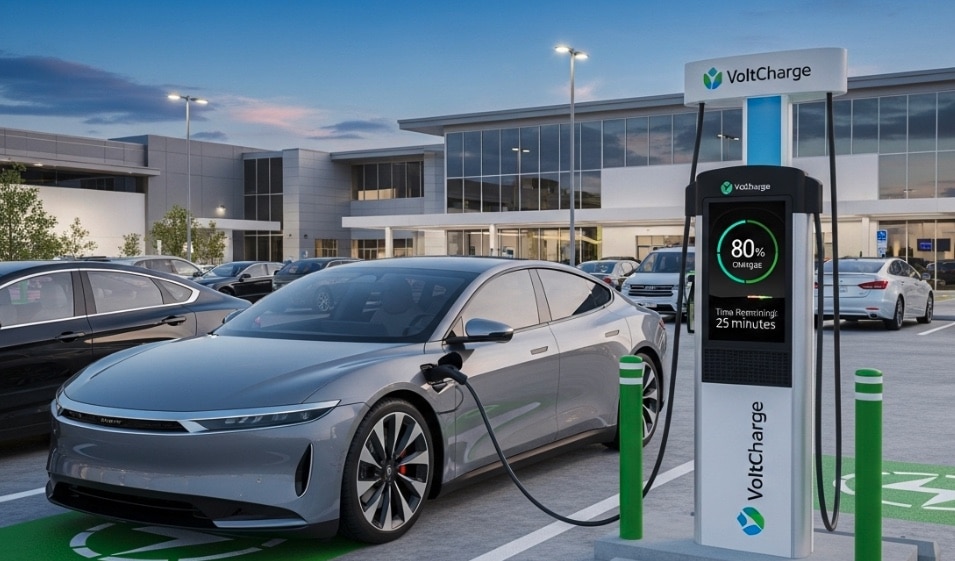
Every major automaker is going electric. Tesla sold 1.8 million EVs in 2024, and GM, Ford, and Toyota have all committed to full or partial EV lineups within the next decade.
Early investors in charging stations today are positioning themselves much like gas-station pioneers a century ago.
Investment Levels
- Level 2 chargers (4–8 hours for a full charge) cost about $2,000–$8,000 per unit installed.
- DC Fast chargers (30–60 minutes to reach 80 %) cost $50,000–$150,000+, depending on power capacity and electrical work.
Your choice depends on where you plan to install them — office buildings and apartments usually use Level 2, while highway stops and travel hubs need fast chargers.
Revenue and Profit
Level 2 chargers typically earn $1–$3 per hour of charging.
DC Fast chargers charge $0.40–$0.60 per kWh, so a 50 kWh session costs drivers $20–$30.
Profit comes from the margin between what you charge and your electricity cost (usually $0.10–$0.20 per kWh).
Example: A DC Fast charger averaging 10 sessions per day at $25 each makes about $7,500/month.
After electricity and service costs ($2,000–$3,000), that’s roughly $4,500–$5,500 net.
However, keep expectations realistic—many new sites start slower until local EV ownership grows.
Time Investment
Modern systems include remote monitoring, so you can track usage, payments, and alerts online. Maintenance is minimal—mostly cleaning, inspection, and the occasional service call.
Passive Score: 7/10
Government Incentives
The U.S. federal government currently offers a 30 % tax credit on installation costs (up to $100,000 per location through 2032).
Many states add their own rebates, and some utilities even fund part of the setup in exchange for public access.
These programs can reduce your upfront cost by 40–60 % if you apply correctly.
Real Success Story
QuikCharge, a Massachusetts startup, installed its first EV fast-charging site in 2024 with help from local incentives.
In just six months, usage grew from 110 to 450 charging sessions per month, and the station turned profitable within the first year.
Source: Electric Era – QuikCharge Case Study
Should You Install EV Chargers?
This business works if you have $10,000–$50,000+ to invest, can secure high-traffic or destination locations, and believe in the long-term shift toward electric vehicles.
Skip it if you need fast payback or prefer proven, mature markets—but for patient investors, EV charging is one of the most exciting infrastructure plays of the decade.
MACHINE #10: DIGITAL ASSETS (THE ULTIMATE SCALABLE MACHINE)

Here’s where we shift from physical machines to the most scalable, truly passive income opportunity available in 2025: digital assets.
Specifically, websites, YouTube channels, online courses, and digital products that work for you 24/7 with near-zero marginal costs.
Why this is the ultimate machine
Physical machines have constraints—vending machines need restocking, ATMs need cash, car washes need land and equipment.
Digital assets have unlimited scale. A website serving 100 visitors costs the same to operate as one serving 100,000 visitors.
A YouTube video watched by 1,000 people earns the same per view whether it’s watched 10,000 or 10 million times.
The investment is remarkably low
Starting a blog or website costs $100-$500 annually (domain and hosting).
Creating a YouTube channel costs $0 (just your time and maybe $200-$500 for basic equipment).
Building an online course costs $0-$1,000 (course platform fees). Compare this to the $200,000-$500,000 for a laundromat or $50,000-$80,000 for car wash equipment.
Revenue models multiply
Advertising revenue (Google AdSense, YouTube Partner Program), affiliate marketing (earning commissions recommending products), digital product sales (ebooks, courses, templates), sponsored content, membership sites, and increasingly—AI-generated content that produces value at scale.
Income potential is truly unlimited
A blog earning $500/month from ads and affiliates can scale to $5,000/month with more traffic.
A YouTube channel earning $2,000/month can grow to $20,000/month with more subscribers.
An online course selling 10 copies monthly at $200 each ($2,000/month) can scale to 100 copies ($20,000/month) with the same effort once created.
Time investment follows a unique curve
Heavy upfront work (building the website, creating content, filming videos, developing courses) followed by declining time needs as content compounds.
After 6-12 months of consistent work, you might spend 5-10 hours monthly maintaining and updating while income continues or grows.
Passive Score: 8/10
The beauty of compounding
Content you create today generates value forever. A blog post written in 2024 can drive traffic and revenue in 2025, 2026, and beyond.
A YouTube video posted this month can earn advertising revenue for years. An online course sold once continues selling with automated email sequences and evergreen marketing.
Real examples
Pat Flynn built a blog and podcast teaching online business—he now earns $150,000+ monthly from courses, affiliates, and sponsorships.
Michelle Schroeder-Gardner started a personal finance blog while working full-time—she now earns $100,000+ monthly from affiliate marketing.
Graham Stephan built a finance YouTube channel—he earns $150,000+ monthly from ads and sponsorships.
These are exceptional examples, but thousands earn $3,000- $10,000 per month from digital assets.
Getting started is simpler than physical machines
Choose a niche you’re familiar with, such as personal finance, tech reviews, fitness, cooking, parenting, or hobbies.
Start a blog or YouTube channel and consistently create valuable, free content (2-3 posts/videos weekly for 6-12 months).
As your audience grows, monetize through ads, affiliates, and eventually, your own products or courses.
The barrier to entry is your time and consistency, not capital.
The challenges are different
Building an audience takes time (6-12 months minimum before meaningful income).
Algorithm changes affect reach. Competition is fierce in popular niches. Income fluctuates based on traffic and engagement.
But unlike physical machines that depreciate and break, digital assets appreciate as your library grows and compounds.
Why this is the ultimate recommendation
Digital assets combine low startup costs (under $1,000), unlimited scalability (serve 10 people or 10 million), high passivity once established (content works 24/7 forever), and compound growth (every piece adds to your library).
You can start while working full-time, invest mainly time instead of capital, and build something that could eventually replace your income—or sell for 30- 40x monthly revenue when you want to exit.
Bottom line
Digital assets are the most accessible, scalable, and ultimately passive income opportunity available.
Perfect if you have knowledge or passion to share, can commit to consistent content creation for 6-12 months, want unlimited upside potential, and prefer building with time over capital.
Skip if want immediate income (this takes 6-12 months to gain traction), prefer tangible physical assets, or can’t commit to consistent content creation.
This is passive income for the long-term wealth builder who understands that the best returns come from assets that compound over time.
Conclusion
You’ve just seen 10 machines that regular people use to build wealth while they sleep.
Some require serious capital. Others need just a few hundred dollars. Some demand weekly maintenance. Others run almost entirely on autopilot.
But here’s what they all have in common: they work.
Real people—not gurus, not trust-fund kids, just regular folks—are using these exact machines to escape the time-for-money trap. They’re building income that flows whether they show up or not.
The Question Isn’t “Can This Work?”
The question is: Which machine fits YOU?
- Got $200 and weekends free? Start with vending machines.
- Have $5,000 and want high returns? Try ATMs.
- Need fast cash to reinvest? Photo booths accelerate everything.
- Want something truly hands-off? Digital assets scale infinitely.
- Believe in the future? EV charging stations position you for the next decade.
Here’s What Happens If You Do Nothing
A year from now, you’ll be in the exact same place. Same job, income ceiling and trading time for money.
Meanwhile, someone who read this post will have 5 vending machines generating $1,500 monthly. Someone else will have launched a digital course earning $3,000 monthly. Another person will have 3 ATMs pulling in $2,000 monthly.
They’re not smarter than you. They’re not luckier. They just started.
The Best Time to Start Was Five Years Ago
The second-best time is right now.
Pick one machine. Just one. Start small. Test it. Learn from it. Scale it.
Six months from now, you could wake up to more money than you went to bed with. Not because you worked harder, but because you built a machine that works for you.
The American Dream isn’t dead. It just evolved.
Welcome to the new era of passive income.
Now go build your machine.
Want to Get Paid for Playing Games on Your Phone?
I tested and compared the best reward apps and sites, so you don't waste time on the fake ones. See which ones actually pay, how low the cash-out minimums go, and which offers are worth your time.
- ✅ Low cash-outs, some from just $1
- ✅ PayPal, gift cards and more
- ✅ Games, surveys and simple tasks
- ✅ Honest tips to avoid tracking problems
Earnings aren't guaranteed and results vary. Treat it as a bonus for time you already spend on your phone.