
Star Spark Review – Earn $180 for Clearing Blocks? Yeah, Right…
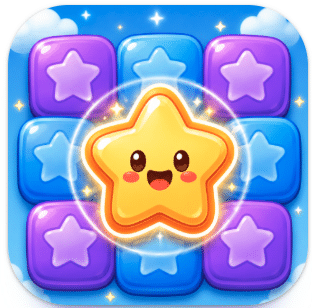 Welcome to my Star Spark Review!
Star Spark is another one of those mobile games that looks completely harmless at first. The gameplay is simple: colorful blocks fill the screen, you tap matching blocks to eliminate them, and the board gradually disappears as you make combinations.
Nothing complicated, nothing particularly challenging, and certainly nothing that would normally make you think you could earn hundreds of pounds from it.
Yet that is exactly what Star Spark tries to make you believe.
Want to Get Paid for Playing Games on Your Phone?
I tested and compared the best reward apps and sites, so you don't waste time on the fake ones. See which ones actually pay, how low the cash-out minimums go, and which offers are worth your time.
- ✅ Low cash-outs, some from just $1
- ✅ PayPal, gift cards and more
- ✅ Games, surveys and simple tasks
- ✅ Honest tips to avoid tracking problems
Earnings aren't guaranteed and results vary. Treat it as a bonus for time you already spend on your phone.
The game is promoted with the familiar promise of earning hundreds of dollars simply by playing. As you eliminate blocks, your virtual cash balance increases, and before long, the game throws a surprisingly large reward your way.
It sounds fantastic.
Unfortunately, there is a very important detail that the flashy rewards don’t make nearly as obvious: the money displayed inside Star Spark is not the same thing as real money in your bank or payment account.
In my view, Star Spark follows the classic formula used by many so-called money-making games: give players enormous virtual rewards, make the balance look exciting, surround the gameplay with advertisements, and set the cash-out requirement high enough to keep people playing for as long as possible.
Let’s take a closer look.
Star Spark Makes Money Look Extremely Easy
The game doesn’t need much explanation. Blocks of different colors appear on the board, and your job is to tap groups of matching colors to eliminate them.
As the blocks disappear, you progress through the level and receive small cash rewards.
At first, the amounts might seem fairly modest. You may receive a few cents here and there, gradually building up your virtual balance as you continue playing.
Then something interesting happens.
Once you clear the board, Star Spark can suddenly give you a much larger reward — around £36.
That’s a pretty impressive jump for completing a simple puzzle level.
But the game isn’t finished tempting you yet.
You can apparently multiply that £36 reward by five, potentially turning it into £180 with another tap.
And that is exactly the kind of reward designed to make players think, “Okay, this might actually be worth playing.”
After all, who wouldn’t be interested in making £180 from a few minutes of tapping colored blocks?
There is just one problem.
The £180 Isn’t Really £180
The biggest mistake you can make with Star Spark is treating the number shown on the screen as money you have actually earned.
It isn’t.
That virtual balance remains inside the game, where it can make you feel as though you are getting closer and closer to a substantial payout. Unfortunately, the number itself does not mean that Star Spark has deposited £180 into your account or that you can spend it anywhere.
Instead, the game uses the balance as part of its reward system.
That distinction matters enormously.
A legitimate payment platform can show you an earned balance because that balance corresponds to money it actually owes you. Star Spark, by contrast, can display whatever numbers its reward system is programmed to show.
£36 can become £180 on the screen without becoming £180 in your pocket.
That’s where the whole setup starts to fall apart.
Then You Discover the £500 Cash-Out Requirement
If the £180 reward has already got your attention, the next step is to check the withdrawal option.
That’s when Star Spark delivers another familiar surprise.
The minimum cash-out requirement is £500.
Suddenly, that huge £180 reward doesn’t look quite so impressive.
You haven’t actually reached the withdrawal threshold. Instead, the game has given you a large enough virtual reward to make you believe that the £500 target might be within reach.
That creates a powerful incentive to keep playing.
Every new level becomes another opportunity to increase the balance. Every additional reward makes the target appear slightly closer. Before long, you may find yourself continuing to play simply because you don’t want all the progress you’ve supposedly made to go to waste.
And that is precisely why a £500 minimum withdrawal is such an important red flag in this type of game.
The Classic Ad Trap
Star Spark follows a pattern that should look familiar if you’ve reviewed other “earn money” games.
First, the game gives you a small reward.
Then the amounts become more exciting.
After that, you receive a surprisingly large cash reward for completing a level.
Next comes the opportunity to multiply it.
Meanwhile, advertisements appear throughout the experience.
The result is a very simple cycle:
Play → earn virtual cash → watch ads → play more → earn more virtual cash → watch more ads.
The longer you remain inside the game, the more opportunities there are to show you advertisements.
From the developer’s perspective, that is the important part.
The game doesn’t necessarily need to give you £500. It needs to give you enough of a reason to keep playing until you’ve watched plenty of advertisements.
And Then You Have to Watch an Ad to Collect More Money
The advertising strategy becomes even more obvious when you complete a level.
After receiving your reward, you need to tap the Get button to collect it.
What happens next?
An advertisement appears.
Again.
That isn’t particularly unusual in free mobile games, because developers need some way to monetize a free product. However, when the game simultaneously tells players they can make hundreds of pounds, the relationship between the reward and the advertising becomes much more interesting.
You are not simply playing a free puzzle game.
You are being encouraged to continue playing because the game keeps placing money in front of you.
Then, whenever another reward becomes available, an advertisement can appear before you collect it.
The cycle reinforces itself.
The bigger the virtual reward looks, the stronger the incentive to keep watching.
Why the £500 Target Matters
Think about the psychology behind this for a moment.
If Star Spark allowed you to cash out after earning £1, you wouldn’t need to play for very long.
A £5 threshold wouldn’t necessarily keep you around either.
However, a £500 threshold creates a much longer journey.
The game can hand out £20 here, £36 there, perhaps another large reward later, while constantly giving you the impression that you’re making progress.
Unfortunately, the higher that virtual balance climbs, the more time you have already invested.
That can make quitting feel difficult.
You might think, “I’ve already played this much, so I might as well keep going until I reach £500.”
Your previous time investment does not make the remaining balance any more withdrawable.
Don’t Confuse Gameplay Rewards With Real Earnings
This is the point I would emphasize most strongly to anyone considering Star Spark.
A number inside a game is not proof of a payment.
The £36 reward isn’t proof that you have earned £36.
The £180 multiplied reward isn’t proof that £180 is waiting for you.
Even a virtual balance approaching £500 would not, by itself, prove that the developer will actually send you £500.
Until money reaches your payment account and you can genuinely use it, you should treat these figures as in-game rewards rather than income.
That is especially important with games that advertise themselves as easy ways to make hundreds of dollars.
How Star Spark Really Benefits the Developer
Once you look at the entire system together, the business model becomes much easier to understand.
Star Spark gives you a simple puzzle game that costs nothing to download. It then adds an attractive cash-reward system, provides increasingly exciting virtual rewards, and uses advertisements throughout the gameplay.
Consequently, the developer has a strong incentive to keep you engaged for as long as possible.
Every level gives you another reason to continue.
Every “Get” or multiplier opportunity creates another chance to show an advertisement.
Meanwhile, the £500 cash-out requirement keeps the finish line far enough away to encourage continued play.
That is why I consider Star Spark an advertising trap rather than a genuine money-making opportunity.
Final Verdict: Avoid Star Spark
Star Spark might be a perfectly simple block-elimination game if you remove the money-making gimmick. Tap the matching colors, clear the board, progress through levels — there’s nothing particularly wrong with that concept.
The problem starts when the game wraps that basic puzzle around the promise of hundreds of dollars in earnings.
A £36 reward suddenly becoming £180 sounds incredible, but it means very little when the minimum withdrawal requirement sits at £500. Add the constant opportunities to trigger advertisements, and the purpose of the reward system becomes difficult to ignore.
In my opinion, Star Spark is not worth your time if you’re downloading it to make money.
Don’t let a rapidly increasing virtual cash balance convince you that you’ve found an easy income source. Those numbers are there to keep you playing, while the advertisements generate revenue for the people behind the game.
You may clear hundreds of colorful blocks and watch your balance climb.
You may even see £500 appear on the screen.
That still doesn’t mean you’ll receive £500.
For me, the verdict is simple: skip Star Spark.
If you want a block puzzle game, find one that focuses on being fun. If you’re looking for an app that genuinely pays you, Star Spark is not one I would recommend chasing.
Want to Get Paid for Playing Games on Your Phone?
I tested and compared the best reward apps and sites, so you don't waste time on the fake ones. See which ones actually pay, how low the cash-out minimums go, and which offers are worth your time.
- ✅ Low cash-outs, some from just $1
- ✅ PayPal, gift cards and more
- ✅ Games, surveys and simple tasks
- ✅ Honest tips to avoid tracking problems
Earnings aren't guaranteed and results vary. Treat it as a bonus for time you already spend on your phone.