
Clearshot Smash Review: The $3,000-a-Day Money Game Is an Advertising Trap
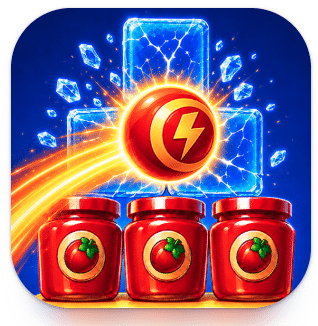 Welcome to my Clearshot Smash Review!
Clearshot Smash makes an outrageous promise: play a simple cannon game and supposedly earn hundreds or even thousands of dollars a day.
The advertising doesn’t exactly try to be subtle, either.
Promotional material uses MrBeast’s image, shows huge amounts of cash being handed out, and suggests that ordinary players can make $1,000, $3,000 a day, or potentially even more.
Want to Get Paid for Playing Games on Your Phone?
I tested and compared the best reward apps and sites, so you don't waste time on the fake ones. See which ones actually pay, how low the cash-out minimums go, and which offers are worth your time.
- ✅ Low cash-outs, some from just $1
- ✅ PayPal, gift cards and more
- ✅ Games, surveys and simple tasks
- ✅ Honest tips to avoid tracking problems
Earnings aren't guaranteed and results vary. Treat it as a bonus for time you already spend on your phone.
At first glance, it looks almost too good to be true.
That’s because it is.
After testing Clearshot Smash, I found what appears to be another fake-money game built around the same basic formula I’ve seen repeatedly in these reward apps: display increasingly ridiculous cash balances, set withdrawal requirements, keep the player progressing, and bombard them with advertisements along the way.
The game itself is simple.
The money-making promise is anything but believable.
The Advertising Is Already a Huge Red Flag
Let’s start with the most outrageous part: the advertising.
Clearshot Smash is promoted using MrBeast’s image alongside scenes of people supposedly receiving large amounts of money.
The message couldn’t be clearer: download the game, play it, and you could supposedly make serious money.
We’re talking about claims of $1,000 or even $3,000 per day.
Stop and think about that.
What exactly are you doing to supposedly earn this money?
You’re firing virtual cannonballs at objects.
That’s it.
You’re not selling a product, completing professional work, investing capital, or providing a valuable service. You’re playing a basic physics puzzle on your phone.
Yet the advertising wants you to believe that this activity can generate thousands of dollars every day.
That’s not a realistic income opportunity. It’s bait.
And the MrBeast imagery makes the whole thing even more outrageous because it creates the impression that these enormous cash giveaways somehow connect to the game.
What Is Clearshot Smash?
The actual game is a straightforward physics puzzle.
You have a collection of objects on the screen, along with a limited number of cannonballs. Your job is to tap the appropriate items, fire the cannon and knock everything down.
The objective is simple:
Fire the cannonballs. Hit the targets. Clear the level.
There is some basic strategy involved because you don’t have an unlimited supply of shots. You need to work out the best way to destroy the objects using the cannonballs available to you.
As a casual puzzle game, that’s perfectly fine.
In fact, if Clearshot Smash were simply advertised as a free physics puzzle, I wouldn’t have much to complain about.
The problem begins when the game puts a huge cash prize in front of you and tells you that playing these levels can make you rich.
That’s where the experience changes completely.
50,000 Downloads — But Where Are the Reviews?
There’s another interesting warning sign.
Clearshot Smash is still listed as being in early access, despite already having around 50,000 downloads.
That means potential players don’t have the usual collection of reviews and experiences from other users to examine.
Normally, that’s where you would look for answers.
Did anyone actually get paid?
Did withdrawals work?
How long did the payment take?
Did players encounter additional requirements?
Unfortunately, without a meaningful review history, it’s much harder for someone considering the app to find out what happens at the end.
So I decided to follow the supposed money-making process myself.
And it didn’t take long before the numbers became ridiculous.
Your First Reward: £21.82
After completing one of the early levels, Clearshot Smash gives you a cash reward notification.
My first reward was approximately £21.82.
Really?
More than twenty-one pounds for completing an early level of a simple cannon puzzle?
That should immediately make you suspicious.
Imagine a legitimate developer trying to operate an ad-funded mobile game while paying every player more than £20 for completing a few seconds of gameplay.
The numbers simply don’t make economic sense.
Yet that large reward serves an important purpose.
It makes you feel like you’ve already started earning serious money.
Once you see £21.82 sitting in your balance, you’re much more likely to continue.
After all, why would you stop when you’re supposedly already earning?
That’s where the trap begins.
Then You Try to Withdraw
Naturally, after receiving a cash reward, I wanted to see whether I could actually withdraw it.
I tapped the wallet.
And, surprise!
The money wasn’t available.
Instead, Clearshot Smash told me that I needed to upgrade to Level 20 before I could withdraw.
There’s the first moving goalpost.
The game has already told you that you’ve earned £21.82, but you can’t actually take the money.
You need to keep playing.
That’s a crucial distinction.
Displaying money is easy. Actually paying it is what matters.
Oh, How Generous of Them!
Then something rather amusing happened.
After completing Level 2, Clearshot Smash told me that I had earned a new privilege.
Apparently, I no longer needed to reach Level 20.
The withdrawal requirement had been reduced to Level 15.
Wow.
How generous!
The game had just knocked five levels off my journey to the supposed money.
I was almost tempted to send the developer a thank-you card.
Of course, this isn’t really generosity.
It’s a clever psychological trick.
The game has already convinced you that you have money waiting for you. Now it tells you that the target has moved closer.
Instead of thinking, “This is ridiculous,” you may start thinking:
“I’m only five more levels away. I might as well finish.”
That’s exactly the behaviour these systems are designed to encourage.
Level 5: Here Come the Video Ads
Then we reach another important stage.
At around Level 5, Clearshot Smash begins displaying video advertisements.
And suddenly, the business model starts to make much more sense.
You play a level.
A cash notification appears.
Your balance ticks up.
Then an advertisement shows up.
You keep playing.
Another reward appears.
Another advertisement follows.
Before long, the screen is constantly reminding you about money while the game keeps giving you opportunities to watch ads.
That is the part I find most revealing.
The game doesn’t need to pay you hundreds of pounds to make money from you.
It needs to keep you engaged.
It needs you to keep playing.
Most importantly, it needs you to keep watching advertisements.
The bigger your balance looks, the stronger the incentive becomes to continue.
The Cash Notifications Keep Coming
Clearshot Smash doesn’t simply show you a balance and leave you alone.
It keeps reinforcing the idea that you’re earning.
A level finishes.
Cash reward.
Another stage ends.
Another cash reward.
Your balance increases.
More money.
The psychological effect is obvious.
You’re constantly being reminded that you’re supposedly building up something valuable.
Meanwhile, the advertisements keep appearing.
That’s a very effective way of turning your attention into advertising revenue.
The money on the screen becomes the carrot. The advertisements are the business model.
Then They Introduce Sublevels
Just when you might think you’re getting closer to Level 15, Clearshot Smash introduces another obstacle.
At around Level 8, the game begins adding sublevels.
Now progressing through the main levels takes longer.
Instead of simply completing one level and moving to the next, you have additional stages to work through.
What a convenient development.
Remember, the game originally told you that Level 20 was necessary.
Then it generously reduced that to Level 15.
Now, just as you approach the withdrawal target, the game introduces additional gameplay that stretches the journey even further.
How unfortunate.
Or perhaps, from the developer’s perspective, how convenient.
Every additional sublevel means more gameplay.
More gameplay means more opportunities to show advertisements.
And the longer you believe you’re approaching a huge cashout, the less likely you are to quit.
My Balance Eventually Exceeded £600
By this stage, something else becomes impossible to ignore.
My balance had climbed to more than £600.
Think about that.
I’m playing a basic cannon puzzle.
I’m firing virtual balls at objects.
The game is supported by advertisements.
Yet the balance is supposedly climbing beyond £600.
And we’re still nowhere near the point where the game has actually demonstrated that the money is real.
This is where I completely stopped taking the displayed balance seriously.
No legitimate developer is going to hand every player hundreds or thousands of pounds simply for completing basic levels in an ad-funded puzzle game.
The economics don’t work.
If the game genuinely paid players at the rate it suggests, its advertising revenue would have to support those enormous payouts.
That’s simply not credible.
Don’t Confuse a Game Balance With Real Money
This is the most important lesson from Clearshot Smash.
A number displayed inside an app is not automatically money.
You can have £20 sitting there.
£200 can appear just as easily.
Even £600 means nothing on its own.
The screen could show $3,000 and it still wouldn’t matter.
None of it matters until the money actually reaches your account.
That’s why these enormous balances are so misleading.
They create the feeling that you’re earning.
You see the number increasing and start mentally treating it as money you already own.
Then you become more willing to watch another advertisement, complete another level and spend another few minutes chasing the withdrawal.
But until you receive the payment, it’s just a number inside a game.
Will You Actually Get Paid at Level 15?
I wouldn’t count on it.
The fact that the game repeatedly changes the conditions between you and the supposed withdrawal is already a major warning sign.
First, the requirement is Level 20.
Then you’re suddenly granted the wonderful privilege of withdrawing at Level 15.
Later, sublevels make progression take longer.
At the same time, your balance keeps increasing and advertisements keep appearing.
That combination tells me everything I need to know.
I would not spend hours completing levels simply to discover what happens at the end.
Even if you reach Level 15, there’s no reason to assume that the hundreds of pounds displayed inside the game will suddenly become real money.
The important question isn’t:
“How much money does the game show me?”
It’s:
“How much money has actually reached my account?”
Those are two completely different things.
Final Verdict: 100% Avoid
After testing Clearshot Smash, my verdict is straightforward.
Avoid it if you’re downloading it to make money.
The puzzle itself is harmless enough. Fire the cannonballs, knock down the objects and clear the levels. If you enjoy that type of gameplay, fine.
However, the money-making side is a completely different story.
The advertising claims of $1,000 and $3,000 a day are outrageous for a basic ad-supported puzzle game. The use of MrBeast imagery makes the promotion even more concerning. Then you have the £21.82 early reward, the Level 20 withdrawal requirement, the conveniently reduced Level 15 target, the introduction of video advertisements and the later addition of sublevels.
Meanwhile, your balance can climb beyond £600 without demonstrating that any of that money is actually withdrawable.
At that point, the picture becomes very clear.
This isn’t a realistic way to make money. It’s an advertising trap.
The cannonballs are real inside the game.
So are the targets.
The advertisements are certainly real too.
But that enormous cash balance?
Don’t get excited about it.
Clearshot Smash is 100% fake as a money-making opportunity in my view, and I strongly recommend staying away from it.
Don’t waste your time chasing a withdrawal that keeps moving further away.
And most importantly, don’t let a giant number on your screen convince you that you’ve earned money when you haven’t actually received a penny.
Want to Get Paid for Playing Games on Your Phone?
I tested and compared the best reward apps and sites, so you don't waste time on the fake ones. See which ones actually pay, how low the cash-out minimums go, and which offers are worth your time.
- ✅ Low cash-outs, some from just $1
- ✅ PayPal, gift cards and more
- ✅ Games, surveys and simple tasks
- ✅ Honest tips to avoid tracking problems
Earnings aren't guaranteed and results vary. Treat it as a bonus for time you already spend on your phone.
Ty. Totally knew it. The ads were ridiculous
yes stay away do not download it’s a scam don’t waste your time they are liars…..