
Path Arrows Puzzle Review: $26,000 in a single day? WHAT?
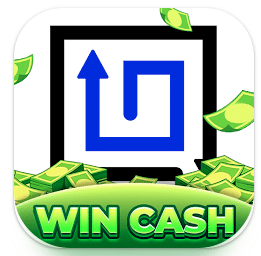 Welcome to my Path Arrows Puzzle Review!
Warning: This game may look like an easy way to make money, but the reality is very different.
Have you ever seen an advertisement promising hundreds or even thousands of dollars for playing a simple mobile game?
Maybe you have seen someone sitting in a car claiming they made $26,000 in a single day. Perhaps the advert even shows a PayPal balance growing rapidly while the person confidently tells you that anyone can do the same.
Want to Get Paid for Playing Games on Your Phone?
I tested and compared the best reward apps and sites, so you don't waste time on the fake ones. See which ones actually pay, how low the cash-out minimums go, and which offers are worth your time.
- ✅ Low cash-outs, some from just $1
- ✅ PayPal, gift cards and more
- ✅ Games, surveys and simple tasks
- ✅ Honest tips to avoid tracking problems
Earnings aren't guaranteed and results vary. Treat it as a bonus for time you already spend on your phone.
That is exactly the kind of advertising I found for Path Arrows Puzzle.
At first glance, it looks like a harmless puzzle game. You tap arrows, complete levels, and supposedly watch your balance increase. However, once you actually play the game, the story starts to look very different.
The biggest warning sign is the enormous amount of money promised compared with the simplicity of the game.
$500 in 40 minutes? Be careful.
The advertisement claims that you can make huge amounts of money simply by playing. One advert even features a woman claiming that she made $26,000 a day.
Let’s be realistic for a moment.
If a simple puzzle game could genuinely generate thousands of dollars every day for ordinary players, people would not need traditional jobs.
Everyone would be downloading it. The developers would have discovered an extraordinary money-making system that would be almost impossible to keep secret.
That is not how these apps work.
Instead, the advertising creates excitement, urgency and curiosity. You see money appearing on the screen, so you naturally want to discover whether you can get it too.
That is where the trap begins.
What actually happens when you play?
Path Arrows Puzzle is based on a very simple concept. You tap arrows to clear the puzzle and progress through different levels.
Initially, the game appears to reward you with small amounts of money.
After completing a level, you might see a few cents added to your balance. In my case, the game showed around four cents after the first level.
That might seem insignificant, but it is actually an important part of the experience.
Why?
Because giving players a tiny reward can make the larger promises feel believable.
You think, “Well, I actually received something. Maybe the bigger rewards are real too.”
That assumption can become dangerous.
Receiving a few cents does not prove that the advertised hundreds or thousands of dollars are genuine.
Some reward apps use small payments or visible balances to create confidence before introducing much larger rewards that are far harder to obtain.
Then the rewards suddenly become ridiculous
As I continued playing, the numbers became increasingly difficult to believe.
The game started displaying much larger cash rewards, including amounts such as £200.
Think about that for a second.
You are playing a basic puzzle game, tapping arrows on your phone, and suddenly the game claims you have earned hundreds of pounds.
Where is that money supposedly coming from?
There is no obvious business activity generating hundreds of pounds for you. Instead, there is something else happening constantly in the background: advertising.
And that is where the business model becomes much easier to understand.
The advertisements are the real money-maker
Every time you are encouraged to watch another video advertisement, someone can potentially earn advertising revenue.
The game gives you an attractive reason to keep playing: money.
Complete another level.
Claim another reward.
Increase your progress.
Watch another advertisement.
Then repeat.
This creates a cycle designed to keep you engaged for as long as possible.
You might think you are playing to earn money. However, the developers may be making their money from the advertisements you watch along the way.
That completely changes the situation.
The cash displayed on your screen can look impressive, but a number inside an app is not the same thing as money sitting in your bank account.
Don’t confuse an in-game balance with real money
This is one of the most important lessons when dealing with reward apps.
Seeing £20, £50, £200 or even £1,000 inside an application does not mean you have actually earned that amount.
Real earnings require a genuine payment.
Until money reaches your account through a legitimate withdrawal process, you should treat an impressive in-game balance with extreme caution.
Unfortunately, that is exactly where some of these games become particularly clever.
They make the withdrawal process appear achievable while constantly moving the goalposts.
The progress bar is another warning sign
Path Arrows Puzzle uses a progress system that supposedly takes you closer to a withdrawal.
The message is simple: complete levels, increase your progress and eventually reach 100%.
Sounds reasonable, right?
Not necessarily.
As I continued, the progress percentage became smaller. Instead of quickly moving toward the supposed withdrawal target, the game could require more and more activity.
That creates another powerful psychological effect.
You have already spent time playing, so you don’t want to stop.
You think:
“I’m already at 33%. I might as well continue.”
Then you play another level.
Another advertisement appears.
Another reward appears.
Another percentage is added.
And the cycle continues.
The problem is that you may never have a clear, realistic route to receiving the large amount the game displayed earlier.
And then there are the “lucky” rewards
Another tactic involves suddenly presenting you with an exciting cash reward.
You might see something like £20 or another attractive amount and receive a Claim button.
Of course, you want to press it.
But then comes the catch:
Watch an advertisement to claim your reward.
Now the reward becomes a reason to watch another advert.
You are not simply watching advertisements randomly. The game gives you a financial incentive to keep watching them.
That is a much more effective way of maintaining engagement.
The five-star rating trick
There is another part of the experience that deserves attention.
At one point, the game asks you to rate it.
Imagine someone has just seen their balance increase and believes they are earning real money. They might happily give the game five stars.
That can create a misleading impression for other people browsing the app store.
Someone sees thousands of positive reviews and thinks:
“This must be legitimate. Look at all these people saying it works.”
But a five-star review does not necessarily prove that someone successfully withdrew a large amount of money.
People can rate an app based on what they believe they will receive, rather than what they actually received.
That distinction matters.
Be extremely careful with your personal information
There is another issue that concerns me even more than wasting time.
Some games eventually ask for information to process a supposed withdrawal.
Depending on the payment method, you may be asked for details such as an email address, phone number or other personal information.
I would not hand over personal information simply because an app displays a few cents or promises a much larger reward.
Your data has value.
A few cents is not worth gambling with your privacy.
You should also remember that once you provide information to an unfamiliar company, you may not know exactly how that information will be stored, shared or used.
That is why I personally would not provide my PayPal or other payment details to an app I do not trust.
So, is Path Arrows Puzzle legitimate?
Based on what I observed while testing the game, I would not rely on Path Arrows Puzzle as a genuine way to make money.
The huge rewards shown in the game are not enough to convince me that those amounts represent real, withdrawable earnings.
I also would not recommend spending hours watching advertisements simply because an app promises that you are getting closer to a large payout.
Most importantly, don’t allow a few cents at the beginning to convince you that every larger reward will be paid.
Small rewards can make an offer look credible. They do not automatically validate the bigger claims.
The bigger lesson
Path Arrows Puzzle is not necessarily important because of one particular game.
The bigger problem is the growing number of mobile games and advertisements using the same formula.
Huge earnings.
Fake-looking payment screenshots.
Simple gameplay.
Constant advertisements.
Growing balances.
Progress bars.
Exciting cash rewards.
And eventually, an increasingly difficult withdrawal process.
Once you recognise the pattern, these apps become much easier to identify.
My advice is simple: don’t believe an advertisement just because it shows money.
Don’t assume a game is legitimate because it has a high rating.
Don’t provide personal information simply because the app promises a payout.
Most importantly, don’t spend hours watching advertisements in the hope that a fictional-looking balance will eventually turn into real money.
Can you actually make money playing games?
Yes, there are legitimate reward platforms where people can earn small amounts by completing certain activities or playing games.
However, there is a huge difference between earning a little extra money and making thousands of dollars every day.
No legitimate platform should be treated as guaranteed income.
You should never depend on reward apps to pay your rent, bills or essential expenses. A normal job remains far more reliable when you need consistent income.
If you enjoy these apps, treat them as entertainment with the possibility of earning a little extra—not as a replacement for employment.
Final verdict
Path Arrows Puzzle is a major warning sign for me.
The advertisements create the impression that ordinary people can make extraordinary amounts of money simply by playing a basic puzzle game.
Yet the actual experience revolves heavily around advertisements, increasingly unrealistic cash rewards and a progress system that can keep you playing for longer.
That is why I would not recommend spending your time or personal information on this app.
If you already installed it, think carefully before providing payment details or other personal information.
And if you downloaded it specifically because you believed the advertisement promising hundreds or thousands of dollars, don’t let the time you’ve already invested convince you to keep going.
Sometimes the smartest move is simply to stop.
Remember: an amount displayed on your screen is not the same as money in your bank account.
That distinction could save you a lot of wasted time—and potentially protect your personal information too.
Stay skeptical, check the evidence, and never let an exciting cash promise decide for you.
Want to Get Paid for Playing Games on Your Phone?
I tested and compared the best reward apps and sites, so you don't waste time on the fake ones. See which ones actually pay, how low the cash-out minimums go, and which offers are worth your time.
- ✅ Low cash-outs, some from just $1
- ✅ PayPal, gift cards and more
- ✅ Games, surveys and simple tasks
- ✅ Honest tips to avoid tracking problems
Earnings aren't guaranteed and results vary. Treat it as a bonus for time you already spend on your phone.