
Hexagon Sort Crush Review – Will They Pay You? Legit Or Fake?
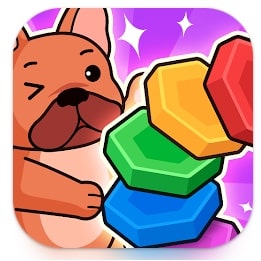 Welcome to my Hexagon Sort Crush Review!
Are you playing Hexagon Sort Crush because you believe reaching level 15 will unlock hundreds or even thousands in cash?
That belief is exactly what this game is built to create—and exactly why it deserves a closer look.
Hexagon Sort Crush presents itself as a casual puzzle game with a lucrative twist. According to its claims, once you reach level 15, you can withdraw everything you’ve earned.
Want to Get Paid for Playing Games on Your Phone?
I tested and compared the best reward apps and sites, so you don't waste time on the fake ones. See which ones actually pay, how low the cash-out minimums go, and which offers are worth your time.
- ✅ Low cash-outs, some from just $1
- ✅ PayPal, gift cards and more
- ✅ Games, surveys and simple tasks
- ✅ Honest tips to avoid tracking problems
Earnings aren't guaranteed and results vary. Treat it as a bonus for time you already spend on your phone.
By then, the on-screen balance often shows eye-watering figures, which makes the promise feel irresistible. Unfortunately, that promise doesn’t survive even a basic reality check.
Let’s break down how the game works, what it actually pays (if anything), and why the entire system is designed to benefit one side only.
The Core Claim: “Reach Level 15 and Cash Out”
From the outset, Hexagon Sort Crush pushes a simple narrative. Play the game, complete levels, and once you reach level 15, you can withdraw your balance.
The implication is clear: keep playing, and a big payday awaits.
However, the numbers alone make this unrealistic. By the time players reach level 15, the displayed balance can reach hundreds or even thousands of pounds or dollars
. No free, ad-funded casual game can sustainably pay that kind of money to large numbers of users.
This is where the illusion starts.
How the Gameplay Works
At its heart, Hexagon Sort Crush is extremely simple. You tap and drag hexagon blocks onto a board. When you place blocks of the same color side by side, they merge. Once you stack ten matching hexagons, they disappear, and you clear space to continue.
You repeat this process over and over:
- place red blocks together,
- place green blocks together,
- merge them until they hit the limit,
- clear them,
- collect more so-called “cash units.”
The gameplay requires very little strategy. It’s repetitive by design, which makes it perfect for one thing: keeping you occupied while ads do the real work.
Cash Units, Not Real Money
The game doesn’t technically show dollars or pounds at first. Instead, it uses cash units. That distinction matters because the conversion rate quietly makes things seem more believable.
Roughly speaking, 100 cash units equal £1 or $1. On paper, that looks modest. In practice, it’s still completely unrealistic when you consider how quickly those units accumulate early on.
Even if the units aren’t labeled as real currency, the game clearly wants you to treat them as such. Otherwise, the withdrawal promise wouldn’t matter at all.
Why Level 15 Is the Wall
Here’s the central problem. Because the money is fictitious, the game needs a hard gate to prevent payouts. That gate is level 15.
Games like this don’t simply make the level difficult. Instead, they quietly make it effectively unreachable. Progress slows. Space becomes tighter. The board fills in awkward ways. Success depends less on skill and more on luck or repetition.
As a result, players keep trying. Each attempt means more time in the app. More time means more exposure to ads. Meanwhile, the promised withdrawal remains just out of reach.
This isn’t accidental. It’s the core design.
Advertising Is the Real Business Model
Hexagon Sort Crush is free. There are no upfront payments. That might make it feel harmless. However, free games still need revenue, and here the revenue comes from advertising.
Every video ad you watch puts money directly into the developer’s pocket. That’s the only consistent income stream the game has. Therefore, the game’s real goal is not to help you reach level 15. It’s to keep you playing long enough to watch as many ads as possible.
Early on, ads may appear sparingly. That’s deliberate. The game needs to hook you first. Over time, ads become more frequent. It’s only a matter of time before they dominate the experience.
The “Carrot on a Stick” Tactics
As if the cash promise weren’t enough, the game introduces extra incentives.
Suddenly, you unlock an iPhone challenge event. The message suggests you might win an iPhone simply by playing. There’s no clear explanation, no odds, and no proof of winners. It’s another carrot, dangling just ahead of you.
Then come charity coins.
Now the game claims that watching videos earns you charity coins that can be cashed in for massive rewards.
You’re told to collect 300 charity coins to cash out. The language shifts from personal gain to generosity, as if the game were doing something noble.
In reality, nothing changes. Watching videos still serves one purpose: generating ad revenue.
Ads Become Unavoidable
Once charity coins enter the picture, ads become more obvious. The collect button displays a movie icon. Tap it, and a video ad plays. Each ad is accompanied by more exaggerated claims about how much money the game can pay.
At this stage, the pattern is impossible to ignore. The game keeps inventing new currencies, new events, and new requirements, all to justify more ad views.
None of these systems moves you closer to a real payout.
A Player Review That Says It All
Even with limited feedback available, one Play Store review captures the experience perfectly:
“This is a major scam. They advertise a bonus that will be available immediately. Not so. Withdrawal only after level 3. Wrong. It becomes level 15. Wrong. Withdrawal only after doubling of your balance available. Get there, what then? The answer: Don’t play this game, thus taking their income from them. Clear bait and switch.”
This is the classic pattern. The conditions change. The goalposts move. Each promise quietly replaces the last.
Data and Privacy Concerns
Another important point often overlooked is data privacy. Games like this may eventually ask for PayPal details or other personal information when you attempt to withdraw.
Sharing such information with an app that relies on deceptive tactics is risky. At best, nothing happens. At worst, your data ends up misused. There is no transparency, no support, and no accountability.
Conclusion
Hexagon Sort Crush: A Deceptive Illusion
Hexagon Sort Crush doesn’t offer real monetary rewards. The enticing promise of a level 15 cash withdrawal is nothing more than an illusion. Those “cash” units are purely fictional, and features like the iPhone challenge and charity coins serve as clever distractions.
Here’s the reality:
- You invest your time.
- The developer profits from ad revenue.
- You leave empty-handed.
The entire system is designed to keep you engaged, watching more ads, while delivering no tangible rewards.
There is no realistic scenario where this game pays out what it advertises. If you value your time, uninstall it immediately.
Do not share personal or payment details. And don’t let big numbers on a screen convince you that something impossible has suddenly become real.
This game isn’t a reward opportunity.
It’s an advertising trap.
Want to Get Paid for Playing Games on Your Phone?
I tested and compared the best reward apps and sites, so you don't waste time on the fake ones. See which ones actually pay, how low the cash-out minimums go, and which offers are worth your time.
- ✅ Low cash-outs, some from just $1
- ✅ PayPal, gift cards and more
- ✅ Games, surveys and simple tasks
- ✅ Honest tips to avoid tracking problems
Earnings aren't guaranteed and results vary. Treat it as a bonus for time you already spend on your phone.