
Triple Fruits Review – They Make Money, You Waste Time!
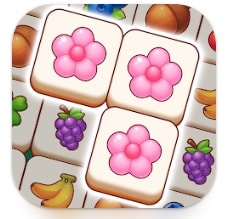 Welcome to my Triple Fruits review!
There’s no shortage of casual puzzle games on the Play Store. Some are simple time-killers, while some are creative spins on tile-matching mechanics.
However, many of them are nothing more than bait designed to lure people into watching ads under the illusion of making money.
Before we continue this review, a quick heads-up: not all “reward apps” are created equal. Some are genuinely decent for a bit of extra money on the side, while others are basically ad farms designed to waste your time.
If you’d rather stick to platforms with a solid track record, here are the ones I actually recommend in 2026:
Alright — now let’s get back to the review and see what this app really does.
Triple Fruits, developed by Snow Ball — the same studio behind Night Ball — falls squarely into the last category. With just 50 installations so far, it’s still under the radar, but it carries all the familiar hallmarks of a fake “cash puzzle” game.
At first glance, it looks like a typical elimination puzzle: colorful fruit tiles that need to be matched and cleared. But beneath this innocent exterior lies a trap that countless other apps have already used to exploit unsuspecting players.
Let’s dig into what this game is, how it works, and why its promise of easy money is nothing but an illusion.
👉 Don’t forget to Click here to discover the top-rated platforms for making extra cash online!
What is Triple Fruits?
Triple Fruits is a casual elimination puzzle game. The concept is straightforward and instantly familiar to anyone who’s played other “triple match” titles. You have a stack of fruit tiles in front of you. At the bottom of the screen, there are seven slots. Each time you tap a tile, it moves into one of these slots. When you align three identical tiles in the slots, they get eliminated, creating more space.The objective is simply to keep clearing tiles without running out of slots.
This style of gameplay can be mildly addictive. It requires a bit of concentration and planning, since running out of space ends the level. On the surface, it’s a competent if unoriginal puzzle format. The real twist — and the reason people download the game in the first place — comes from the cash rewards that appear almost immediately.
How Triple Fruits Promises Money
Like so many other fake reward apps, Triple Fruits doesn’t just let you play a game — it dangles the promise of quick, easy money. The hook is powerful:
- Your First “Winnings” – After you remove your first tiles, you suddenly receive a reward of $5. A balance appears at the top of the screen, giving you the sense that you’ve just earned real money.
- Level-Based Payouts – After completing level 1, you’re told you’ve earned a total of $20. After level 2, another $10 is added. By level 3, the rewards seem to explode, with payouts climbing into the hundreds or even thousands of dollars in just minutes.
- Cash Tiles and Ads – From level 3 onward, things get even flashier. Some tiles now display cash symbols. Match them, and you’re given a prize — say $9. Then the game offers a tempting button: “Claim x3.” Tap it, and you can triple your prize. The catch? You must watch a full video ad before collecting.
This mechanic is where the true purpose of the game reveals itself. The developer isn’t giving away money; they’re making money off of you.
Every ad you watch generates revenue for them. The flashy numbers on your screen entice you to stay engaged with the game while generating profits from constant ad views.
Why the Payouts Are Absurd
At first, it might sound believable.The developer may give small rewards for watching advertisements. But let’s break this down logically.
- If you’re supposedly earning $5 within seconds, $20 after level 1, $10 after level 2, and potentially hundreds by level 3, then the app is claiming to hand out hundreds of dollars per user in under an hour. With even just a thousand players, that would mean paying out hundreds of thousands of dollars.
- No casual puzzle developer on the Play Store could sustain that. Legitimate reward platforms, like survey apps or GPT (Get-Paid-To) sites, typically pay cents or a few dollars per activity because that’s how much ad networks and sponsors actually pay. No one is funding $200 payouts so quickly for tapping tiles.
- The x3 multiplier trick is even more telling. They showed you $9 and told you that you could turn it into $27 just by watching an ad. Ask yourself: if that were real, wouldn’t people everywhere be quitting their jobs and spending all day tapping tiles? The system seems appealing, but when you apply common sense, it collapses.
The truth is simple: these payouts don’t exist. They’re programmed numbers, a façade to keep you hooked.
What Really Happens
Players quickly discover that the cash-out button is where the whole scheme unravels. After being lured with $5, $20, and so on, you tap “withdraw” only to find you can’t cash out yet. First, you need to pass level 3. But here’s the problem:
- The game never lets you finish level 3.
- Instead of a normal progression, you’re trapped in an endless cycle of tiles. No matter how many you eliminate, more appear. The level never ends.
This is deliberate. By keeping you stuck in a loop, the game can continuously feed you new “cash tiles” and force you to watch more ads. You’ll keep thinking the big payout is just around the corner, but in reality, it never arrives.
Endless levels combined with diminishing rewards are some of the most common tricks used by fake money apps. It ensures that players waste hours of their time while the developer collects steady advertising revenue.
Does Triple Fruits Pay?
The answer is no. You might see balances of $20, $200, or even $2,000 piling up on your screen, but they’re meaningless numbers. The requirement to pass level 3 is impossible to meet, which means you’ll never unlock the withdrawal option. Even if the app pretends to process your cash-out, you’ll end up stuck in endless pending queues, fake processing screens, or arbitrary error messages.
The only thing this game pays is the developer every time you sit through another ad.
Conclusion – Don’t Fall for the Trap
Triple Fruits by Snow Ball may look like a harmless tile-matching puzzle, but in reality, it’s nothing more than an ad trap disguised as a money-making app. It employs the same formula as countless other fake cash games, featuring flashy payouts, exaggerated balances, and endless levels designed to keep you watching ads.
Yes, the fruit tiles are colorful, and the mechanics are functional. But the supposed financial rewards are a fantasy. No developer is paying out thousands of dollars for tapping tiles, and the requirement to finish level 3 ensures that you’ll never reach the cash-out stage anyway.
If you value your time and don’t want to be exploited by manipulative tactics, avoid Triple Fruits. It’s not a money-making opportunity — it’s a carefully constructed illusion designed to profit off your attention.
Don’t let yourself become part of the trap.